

The United States’ recent announcement of large-scale arms sales to Taiwan has delivered a new shock to China–U.S. relations, which had been trending toward stabilization.
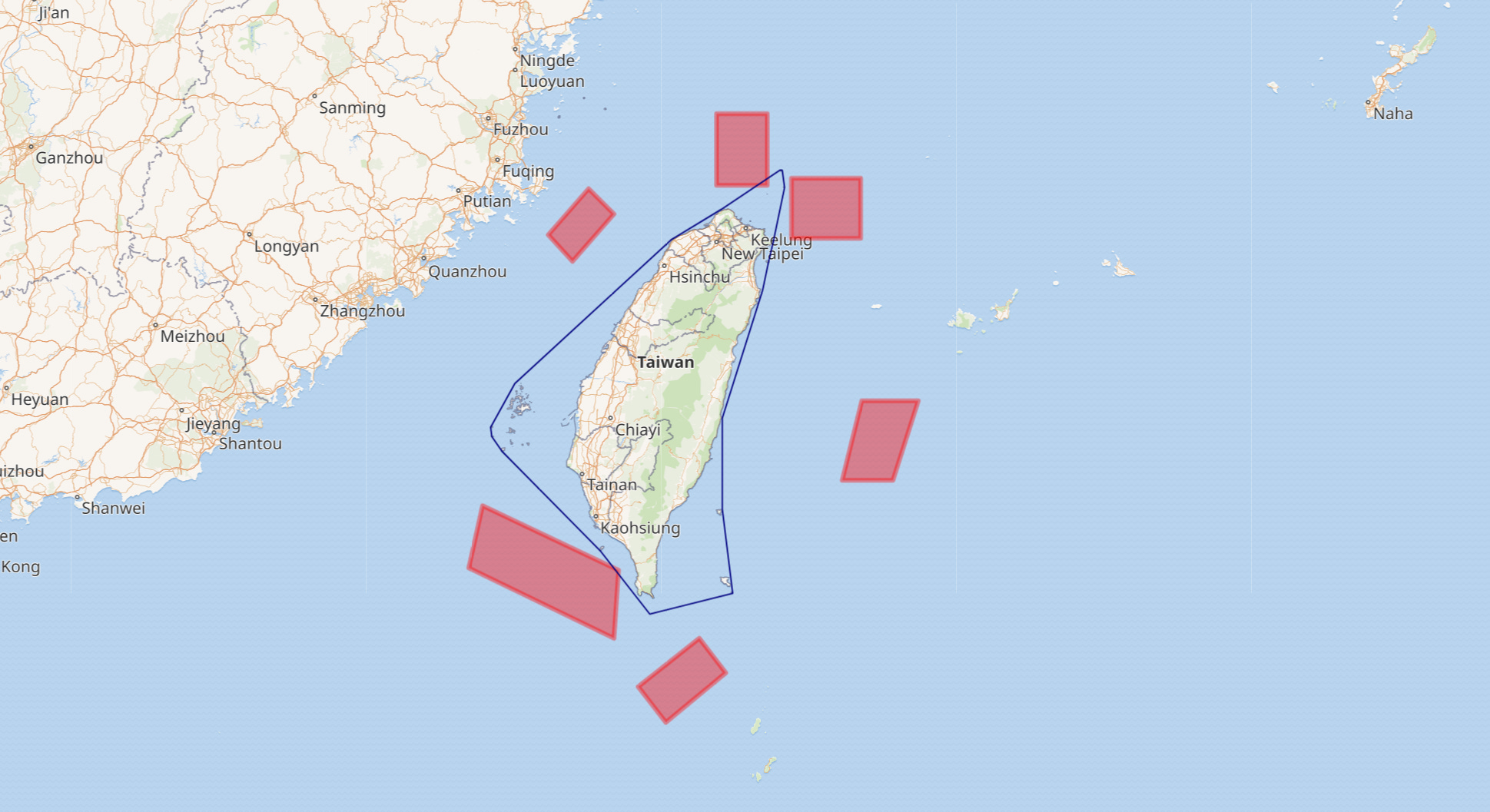
Following the arms sales, the Chinese People’s Liberation Army launched a new round of large-scale drills encircling Taiwan starting on the 29th. China’s Ministry of National Defense described the exercises as a serious warning to “Taiwan independence” separatist forces and external interference.
When asked about the situation during a meeting with Israeli Prime Minister Benjamin Netanyahu, President Trump appeared to downplay the severity of the developments.
Reporter: China’s been doing naval exercises basically to test encircling Taiwan. Can you explain to us what your knowledge is of that? What do you think about that? Have you had any discussions with China on that?
President Trump: Well, I have a great relationship with President Xi, and he hasn’t told me anything about it. I certainly have seen it, but he hasn’t told me anything about it. And I don’t believe he’s going to be doing it.
Reporter: Does it worry you?
President Trump: No, nothing worries me. Nothing.
Reporter: Where there’s smoke, there’s fire. Right? So if you’re encircling, if you’re doing naval exercises and air exercises—
President Trump: I’ve been doing naval exercises for 20 years in that area. Now people take it a little bit differently, but in fact larger than they’re doing right now. So we’ll see. But they’ve been doing that for 20, 25 years.
In an exclusive interview with Phoenix Television on the 30th, Wu Xinbo, Director of the Institute of International Studies at Fudan University, said these developments reflect the dual nature of U.S. policy toward China. He predicted that in 2026, the Taiwan issue is likely to become the central focus of China–U.S. strategic competition.
When China and the United States had reached a de facto economic and trade truce at their meeting in Busan and bilateral relations were showing signs of stabilization, Washington’s renewed large-scale arms sales to Taiwan once again exposed the contradictory character of U.S. China policy. The Taiwan issue is expected to emerge as the key pressure point in bilateral relations in 2026.
When pursuing its own interests, the United States may choose to compromise with China, seek a temporary ceasefire, or even extend a hand of cooperation. Yet its efforts to contain and pressure China have never truly ceased. Once Washington secures what it wants, the other side of its policy inevitably resurfaces. China has already announced a series of countermeasures against the United States and conducted military exercises. It is foreseeable that China will take additional follow-up actions and step up pressure on the United States over the Taiwan issue.
On whether intensified struggle with the United States over Taiwan can coexist with stable economic and trade relations, the answer is yes, in principle. As long as the United States refrains from introducing new provocative measures on economic and trade issues, China could agree to maintain the current status quo. However, on the Taiwan question and broader regional security issues, China and the United States will still face intense confrontation and contestation.
If a Trump visit to China is to proceed smoothly, the U.S. side must address China’s concerns about Taiwan. China would need to present a series of firm demands and ensure Washington accepts them. If the United States refuses or only partially complies, the feasibility of such a visit would be in doubt; even if it were to take place, its success and ability to achieve its intended goals would be highly uncertain. Since the United States has taken provocative actions regarding the Taiwan issue, it should be prepared to face China’s demands and bear the corresponding pressure.