

China just banned helium exports today, a resource it barely produces. It dominates the supply of rare earths. It does not dominate helium. In fact, China imports more than 80% of the helium it uses.
That makes this July 10 announcement much more interesting.
Document No.: Announcement No. 29 of 2026
Issuance Date: July 10, 2026
Commodity: Helium | Customs Commodity Code: 2804290010
Effective Date: Effective from the date of promulgation
Pursuant to the relevant provisions of the Foreign Trade Law of the People's Republic of China, the Ministry of Commerce and the General Administration of Customs have decided to implement temporary export prohibition controls on helium (Customs Commodity Code: 2804290010).This Announcement shall take effect as of the date of promulgation. Any subsequent adjustments will be announced separately.Ministry of Commerce / General Administration of Customs
July 10, 2026
The MOFCOM announcement itself is extremely short. It just said helium under customs code 2804290010 would be subject to a “temporary export prohibition” from July 10. There is no stated expiry date, no licensing process, no country exemptions, purity thresholds or transition arrangements for existing contracts.
This is also legally different from China’s better-known export controls on dual-use items. The notice relies only on the Foreign Trade Law. It does not cite the Export Control Law, the Customs Law or the regulations governing dual-use exports. This is looks less like a national-security licensing regime and more like emergency management of a product in short supply.
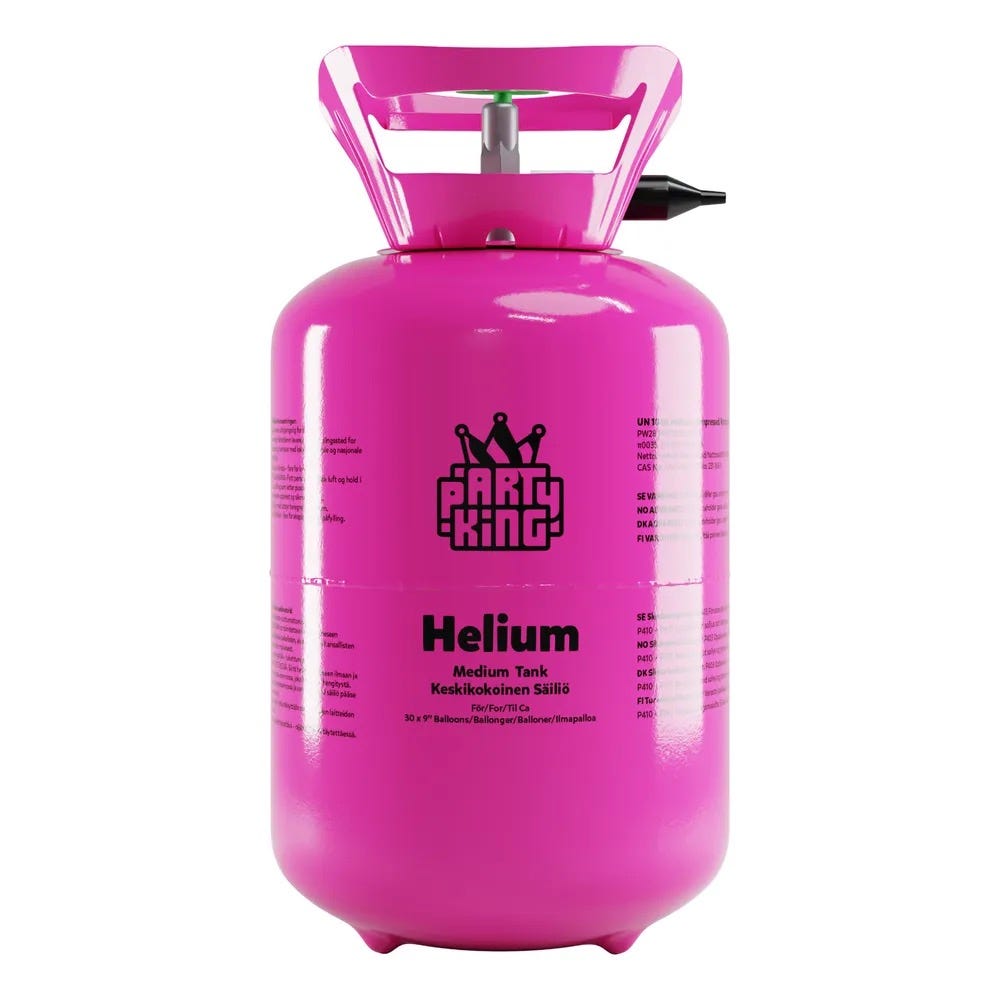
Helium is easy to dismiss as the gas used in party balloons. In reality, its most important applications are highly strategic. Helium is chemically inert, extremely light and highly conductive. Liquid helium also remains liquid at temperatures close to absolute zero. These properties make it difficult to replace in MRI machines, rocket systems, advanced scientific research and semiconductor manufacturing.
And Helium matters to chips. In a chip fab, helium performs several jobs. Its most important role is wafer cooling. During plasma etching and other high-energy processes, heat builds up on the silicon wafer. A thin layer of helium is introduced between the wafer and the electrostatic chuck underneath it, allowing heat to move away quickly and evenly.
If temperature control becomes unstable, the wafer can deform, process uniformity can deteriorate and yields can fall.
Helium is also used as a carrier or purge gas, in ion implantation, in some deposition and lithography equipment, and for highly sensitive leak detection in vacuum systems.
Alternatives exist for some of these uses. Nitrogen or argon can replace helium in certain processes. New cooling technologies are also under development. But switching gases inside an advanced production line is not like changing suppliers for office equipment. It can require tool modifications, process qualification and months of testing.
For the most demanding steps in advanced chip manufacturing, there is no substitute that fabs can immediately deploy at scale.
That does not mean a helium shortage shuts down a fab overnight. Large chipmakers usually hold inventories, sign long-term contracts and receive priority from industrial-gas suppliers. During a shortage, party balloons, welding and other lower-value uses are cut first.
But once inventories fall below the minimum operating needs of critical equipment, fabs may have to slow production, prioritize their most valuable products or temporarily idle individual tools.
For a country spending heavily to expand semiconductor capacity, that is not a trivial risk.
The helium market is small, opaque and extraordinarily concentrated.
According to the [US Geological Survey](https://pubs.usgs.gov/periodicals/mcs2026/mcs2026-helium.pdf), global helium production reached roughly 190 million cubic metres in 2025. The United States produced about 81 million cubic metres and Qatar another 63 million. Together, they accounted for roughly three-quarters of global output.
Russia produced around 18 million cubic metres and Algeria 11 million. The four largest producers therefore controlled more than 90% of the market.
This concentration is only part of the problem. Most helium is recovered as a by-product of natural-gas processing. A country can possess substantial underground resources without being able to bring commercial helium to market. Production depends on the economics of the gas field, the concentration of helium in the raw gas, purification and liquefaction facilities, and access to specialized cryogenic containers.
The containers themselves are a bottleneck. Liquid helium must be kept at extremely low temperatures and gradually evaporates during transport. Containers must then be returned to the producer for refilling. When shipping routes are disrupted, the shortage of containers can become as important as the shortage of helium.
This is exactly what happened in 2026. The war with Iran disrupted Qatar’s LNG operations and shipping through the Strait of Hormuz. Because Qatar produces helium alongside LNG, the disruption temporarily removed close to one-third of global supply from the market. Damage to Qatar’s facilities is expected to reduce its helium export capacity by around 14% even after partial operations resume.
Russia could have provided some relief. Instead, Moscow introduced its own restrictions in April. Helium exports outside the Eurasian Economic Union now require special government approval, with the regime scheduled to remain in place until the end of 2027.
The European Union, meanwhile, has prohibited imports of Russian helium since 2024 as part of its sanctions regime.
This led to a global shortage as well as a regional fragmentation of the helium market. North American production increasingly supports the United States and its partners. Russian helium is pulled towards China and Eurasia. Qatar has less flexible supply available beyond its most important long-term customers. Industrial-gas companies are allocating scarce volumes to medical, aerospace and semiconductor users.
Helium has become another market in which physical scarcity and geopolitical alignment reinforce each other.
China has some helium resources, mostly associated with natural-gas deposits. But these resources are often low-grade, scattered and expensive to extract.
Domestic production has grown rapidly from a very low base. China had nominal production capacity of roughly 14.7 million cubic metres in 2025, but actual output was only around 4.6 million cubic metres. Many facilities operated far below designed capacity.
China therefore remained heavily dependent on imports. In 2025, it imported more than 4,900 tonnes of helium while producing less than 900 tonnes domestically. Depending on the calculation method, its import dependence was around 84% to 87%.
The sources were also highly concentrated. Qatar and Russia together supplied approximately 98% of China’s helium imports. This was an improvement over China’s earlier reliance on Qatar alone. Russia’s Amur gas-processing complex gave China a second major source that could be transported overland rather than through the Strait of Hormuz.
But diversification from one supplier to two is not genuine supply-chain resilience—especially when one is exposed to a Middle Eastern war and the other has just introduced export approvals.
China’s vulnerability is therefore larger than the import-dependence number suggests. It relies not only on foreign resources, but also on overseas liquefaction facilities, industrial-gas companies, specialized containers and cross-border transport.
China had also begun to function as an Asian processing and trading hub. During the first eleven months of 2025, China imported around 4,294 tonnes of helium and exported approximately 438 tonnes. Some of this was helium purified or processed in China. Some likely reflected regional trading and the re-export of Russian-origin supply.
The exported volume was not huge. Converted into gaseous helium, it amounted to roughly 2.6 million cubic metres—only around 1% to 2% of annual global output.
But in a tight and illiquid market, marginal volumes matter. The impact of removing 2.6 million cubic metres from the Asian spot market can be much larger than the headline global percentage suggests.
China consumed roughly 4.4 million cubic metres of helium in semiconductor manufacturing in 2024, about 16% of its total demand. That share is likely to rise as China builds more wafer fabs, expands advanced memory production and pushes deeper into AI chips, commercial space and high-end scientific equipment.
Helium will not determine whether China catches up with the United States in advanced semiconductors. Lithography equipment, high-bandwidth memory, electronic-design software and leading-edge manufacturing knowledge remain much larger constraints.
But modern chip production is a system. A fab cannot operate with 99 of the 100 inputs it needs. The most advanced lithography machine is useless if the factory cannot secure the gases required to run the surrounding processes reliably.
The ban therefore does three things at once.
First, it keeps Chinese-produced helium inside the country.
Second, it prevents imported helium from being re-exported when international prices rise above domestic prices.
Third, it gives China greater control over how scarce domestic supply is allocated among chipmakers, hospitals, aerospace programmes, research institutes and lower-priority industrial users.
But generally, this is domestic supply management, not resource coercion that many western nations would assume.
The immediate international impact of the ban will fall mainly on Asian users that obtained Chinese-processed helium or Russian helium routed through China.
South Korean, Japanese and Taiwanese semiconductor companies may need to seek additional supply from the United States, Canada or Algeria, or obtain Russian helium through more direct and politically complicated channels.
Russia will lose some flexibility to reach third-country buyers through China, but its importance to the Chinese domestic market will increase. That may strengthen Beijing’s bargaining position in long-term contracts and overland logistics.
For global industrial-gas companies, the ban removes another source of flexible supply. Long-term customers will continue to receive priority, while smaller buyers face higher prices, surcharges and deeper allocation cuts.
The lowest-priority uses will suffer first. Semiconductor fabs and MRI systems will probably remain near the front of the queue.