

Today, the China–U.S. economic and trade teams concluded their talks in Paris. The meetings were held at the OECD headquarters in Paris. The first day of discussions lasted until around 6:00 p.m. local time, while the second day concluded at noon.
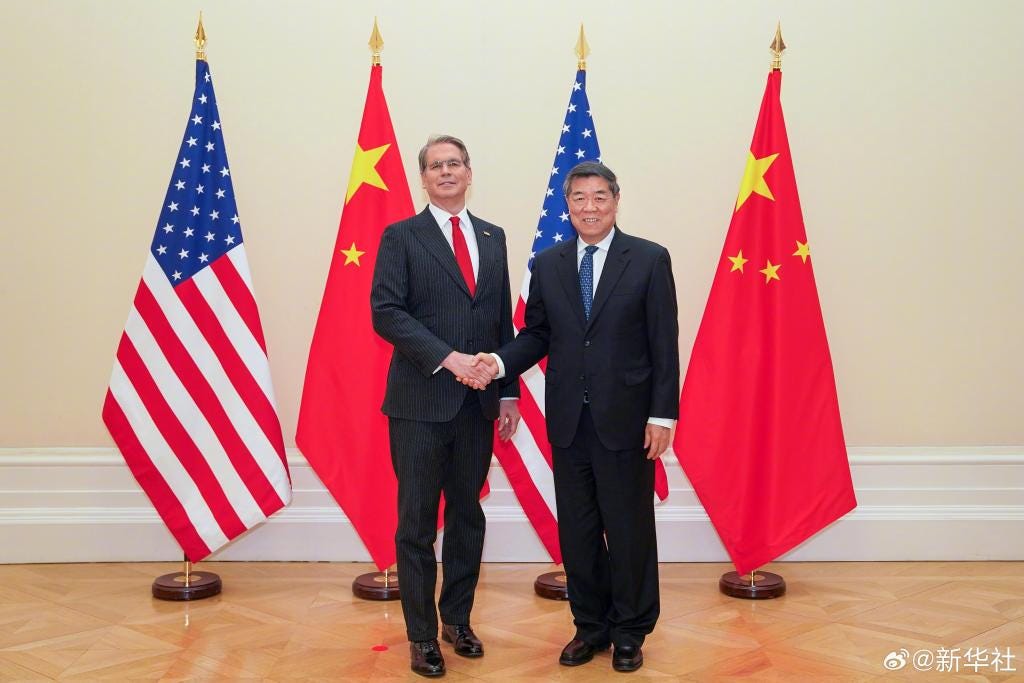
According to reports citing sources familiar with the discussions, the talks were described as “remarkably stable” and “candid and constructive.” They are also expected to help prepare potential “deliverables” for the meeting between the two countries’ leaders scheduled for the end of March. In that sense, the talks were clearly more than a routine working-level exchange; they were aimed at laying the groundwork for the potential leaders’ meeting and identifying possible outcomes in advance.
Based on public statements from both sides, the agenda of the talks included the following items:
Tariffs: the United States’ new Section 122 tariffs and two ongoing Section 301 investigations.
Trade: agricultural purchases (including soybeans, poultry, beef, and certain non-soybean crops), purchases of Boeing aircraft, and energy exports (coal, oil, and natural gas), as well as the possible establishment of a Board of Trade.
Investment: the proposal to establish a Board of Investment.
Non-tariff measures: China’s export controls on rare earths, particularly yttrium, a heavy rare earth element critical for jet engine turbines. Greer noted that U.S. companies occasionally report difficulties obtaining rare earth supplies, so the two sides discussed the implementation of the rare-earth provisions under the Busan agreement. This may suggest that some U.S. companies are still encountering supply bottlenecks and have raised the issue with the U.S. government.
China released a readout via Xinhua News Agency.
Non official translation:
Xinhua News Agency, Paris, March 16 — From March 15 to 16 local time, China’s lead representative for China–U.S. economic and trade affairs, Vice Premier He Lifeng, held economic and trade consultations in Paris, France, with the U.S. lead representatives, U.S. Treasury Secretary Scott Bessent and U.S. Trade Representative Jamieson Greer.
Guided by the important consensus reached by the two heads of state, the two sides conducted candid, in-depth, and constructive exchanges on economic and trade issues of mutual concern, including tariff arrangements, the promotion of bilateral trade and investment, and the maintenance of previously reached consultation outcomes. The discussions produced some new consensus, and the two sides agreed to continue maintaining consultations.
He Lifeng stated that under the strategic guidance of the important consensus between the two presidents, the two sides had reached a series of outcomes in the economic and trade field through five rounds of consultations last year, injecting greater certainty and stability into China–U.S. economic relations and the global economy.
Recently, the U.S. Supreme Court ruled that tariffs imposed under the International Emergency Economic Powers Act (IEEPA) were unlawful. Subsequently, the United States imposed a 10 percent import surcharge on all trading partners under Section 122 of the Trade Act of 1974, and has also introduced a number of negative measures targeting China, including Section 301 investigations, corporate sanctions, and market access restrictions.
China’s opposition to the United States’ imposition of unilateral tariffs has been consistent. China urges the United States to completely remove unilateral tariffs and other restrictive measures, and will take necessary actions to firmly safeguard its legitimate rights and interests.
He also expressed hope that the United States will work with China in the same direction, jointly implement the important consensus reached by the two heads of state, expand the list of cooperation while narrowing the list of problems, and promote the healthy, stable, and sustainable development of China–U.S. economic and trade relations.
The U.S. side stated that stable China–U.S. economic and trade relations are very important for both countries and for the world, and contribute to global economic growth, supply chain security, and financial stability. Both sides should reduce frictions, avoid escalation of disputes, and resolve differences through consultation.
The two sides agreed to study the establishment of cooperation mechanisms to promote bilateral trade and investment, continue to make good use of the China–U.S. economic and trade consultation mechanism, strengthen dialogue and communication, properly manage differences, expand practical cooperation, and promote the sustained and stable development of bilateral economic and trade relations.
US readout coming out later:
In advance of @POTUS’ trip to Beijing, @USTradeRep Jamieson Greer and I met with Vice Premier He Lifeng of China to discuss areas of mutual interest.
Talks were candid and constructive, and we are on a good path towards the next meeting between President Trump and General Secretary Xi.
In our discussions, we addressed a number of priorities to promote stability in our relationship, including how to manage bilateral trade and improve market access for the United States.
Both sides subsequently briefed the media. U.S. Treasury Secretary Scott Bessent also gave an interview to CNBC.
Key points from Bessent’s CNBC interview
Whether the presidential visit to China will proceed as scheduled remains to be seen. However, Bessent clarified that media reports suggesting a possible delay because the president asked China to patrol or enforce security in the Strait of Hormuz are completely inaccurate. If the visit were postponed, it would likely be due to logistical considerations, as the president may wish to remain in the United States to coordinate wartime operations, making overseas travel less appropriate at such a time.
His meeting with Vice Premier He Lifeng went very smoothly. In the coming days, China and the United States are expected to issue a statement reaffirming the stability of bilateral relations.
Semiconductor export controls were not discussed. The meeting focused primarily on economic matters, including potential Chinese purchases of Boeing aircraft and agricultural products, while the U.S. side briefed China on the new Section 122 tariffs and the ongoing Section 301 investigations.
CNBC
Thank you very much. We are here in Paris at the OECD headquarters with the Treasury Secretary of the United States. God bless you, Mr. Treasury Secretary. Thank you very much for spending some time with CNBC.
Well, you literally just moments ago wrapped up meetings with the Chinese trade delegation. Tell us how the meetings went and whether or not we should expect President Trump to meet with China in April.
Bessent
The meetings were very good. We’ve got a stable relationship. This is our sixth meeting in our economic consultations. The Vice Premier, He Lifeng, and I have developed great respect for each other. But really, the meetings are generated by the great respect that the two leaders present — President Trump and Party Chairman Xi — have for each other.
You know, we will see whether the visit takes place as scheduled. But what I do want to address is that there’s a false narrative out there suggesting that if the meetings are delayed, it would be because the president demanded that China police the Strait of Hormuz.
CNBC
There have been reports out there to that effect.
Bessent
Yes — that one is completely false. If the meeting were for some reason rescheduled, it would be because of logistics. The president wants to remain at the NSC to coordinate the war effort, and traveling abroad at a time like this may not be optimal.
CNBC
Because that narrative is out there. So you’re not saying that the meeting will be rescheduled, but you’re saying — and correct me if I’m wrong — if it is rescheduled, it would be because of timing and travel, not because of a dispute over the Strait.
Bessent
Exactly. It would be a decision the president makes as Commander-in-Chief to stay in the White House or remain in the United States while this war is being prosecuted.
CNBC
Because you’re a markets expert, obviously a long-time market participant. The markets may react to any word of a delay or pause in the meeting. And you’re saying if this meeting is paused or delayed, the market should not interpret it as a conflict between the two nations.
Bessent
Absolutely not. We had a very good two days here. We’ll be issuing a statement in the next few days reaffirming the stability of the relationship between the first- and second-largest economies in the world.
CNBC
I want to get to the war, I want to get to oil, I want to get to commodities. But first I want to finish up on this meeting with China. It sounds positive.
Were the discussions about things like export controls on advanced American semiconductors? Will the Chinese agree to buy more Boeing jets or other U.S. goods? Can you go into a little more detail about the products and services that were discussed here?
Bessent
Sure. We really don’t discuss our export restrictions in these meetings — it’s more of an economic dialogue. What we do discuss, exactly as you said, are purchase commitments from the Chinese.
We also explain to them our new tariff regime and how that would work — the Section 122 tariffs that were implemented right after the Supreme Court ruled against the president’s use of IEEPA.
And we explain the Section 301 studies that Ambassador Greer and USTR will be conducting, which should be completed by July.
CNBC
Is there an opportunity — assuming the market reaction matters — the stock market is down about 5% from its highs. It hasn’t collapsed, but it is down. Markets are nervous. If you look at the VIX, the volatility index, it’s elevated.
Would you ever consider using tariffs — the 15% tariffs — as a bargaining chip with China vis-à-vis the markets? What are we bargaining for?
Bessent
Because the president has made it very clear. Over the past year, President Trump — through USTR, through myself, and through Commerce — we’ve negotiated trade deals with most of our major trading partners and reordered global trade.
Our goods trade deficit with the world is down. Our goods trade deficit with China is down.
We had substantial tariff income last year. The court said we’ll have to refund that. But I can tell you that because of the change from IEEPA to Section 122, and we’ll see what the Section 301 studies bring — assuming a successful completion of those — it’s very likely that Treasury will see very little change in tariff revenue.
Again, the ultimate purpose of tariffs is to reshore production. The revenues are a very nice incidental benefit along the way. In a sense, it’s payback for the offshoring that occurred because of unfair trade practices.
But at the end of the day, we want to reshore manufacturing in the United States, especially strategic manufacturing.
And to go back to our consultations with the Chinese: we reiterated to them that we do not want to decouple, but we do need to take strategic industries back.
So we are making a strategic adjustment, but not pursuing a generalized decoupling in trade.
Key points from the media briefing by Bessent and U.S. Trade Representative Jamieson Greer
Regarding whether President Trump’s visit to China might be postponed, the U.S. side stated that any delay would not be due to China failing to meet U.S. requests. Rather, it would more likely relate to broader issues such as compliance matters, the status of trade agreements, and overall economic and trade arrangements between the two countries.
The two sides are currently sorting through a number of possible items that could be submitted to the two leaders. A key focus is to further clarify and institutionalize the structure of bilateral trade, including which products the United States should import from China and which products it should export to China, with the goal of making bilateral trade more balanced and more focused on mutually beneficial sectors.
Please note that the following content is based on a transcription of unclear audio and may differ from the speaker’s original remarks.
Reporter:
This meeting was intended to help finalize some potential deliverables for the two presidents to consider when they meet in Beijing next month. Could you give us an idea of what those might be going forward? And given what the president has said about his schedule, is that meeting still expected to take place at that time?
Bessent:
If the president’s visit is postponed, it would have nothing to do with the Chinese making a commitment via to the strengths of Hormuz. Uh it would obviously be in their interest to do so, but a postponement would not be as a result of any ask from the president not being met. The postponement if it happens would be because the commander-in-chief of the United States military believes that he should stay in the United States while this war is being prosecuted.
Greer:
First what we’ve concluded today really is the general terms of a work plan between now and the meeting between the presidents with the idea that there will be potential deliverables at that meeting.
We of course discussed compliance with the Busan agreement. This means rare earths etc. Uh you know from time to time we will get information from US companies or stakeholders about the status of receiving rare earths. And so we covered issues like that related to the agreement. We also talked about expanding trade exports to China in terms of agricultural goods, energy goods etc.
Reporter:
Have you been made aware of any China’s retaliation related Section 301 investigation?
Bessent:
Well, there there were very detailed discussions in terms of the the new tariff authorities. We will be implementing uh it’s the 122. We discussed the USTR and Ambassador Greer’s investigations. But in terms of of retaliation, as I said, there’s great stability in the relationship and the the purpose of these meetings is to prevent any retaliation as we saw this time last year.
Greer:
And I would say we started these talks really by giving them a a preview of what we’re doing on US trade policy as we adjust to the Supreme Court.
Remember, the president’s trade policy hasn’t changed. Our tools may change and we’re conducting these investigations.
We don’t want to prejudge them. And we had a good conversation with our counterparts about that process.
Reporter:
Just briefly — is there a possibility that the president might not go to Beijing? Are you suggesting that as long as the war continues, the commander-in-chief might reconsider the trip?
Bessent:
That’s not what I said. I want to make it clear that our position remains consistent.
Key points from the media briefing by China’s chief trade negotiator Li Chenggang
The discussions covered several topics, including tariff levels under the new circumstances, the possible extension of bilateral tariff and non-tariff measures, and ways to promote bilateral trade and investment cooperation.
Regarding tariff levels under the current circumstances, the U.S. side briefed China on its recent tariff adjustments and its considerations for future measures. The Chinese side expressed concern about the uncertainty created by these developments. Both sides agreed to continue working toward maintaining the stability of bilateral tariff levels, and they also held in-depth discussions on each other’s economic and trade concerns.
The two sides reviewed the implementation of the outcomes of the five rounds of economic and trade consultations held last year, giving overall positive recognition to the progress made. At the same time, the Chinese side made solemn representations regarding the two ongoing Section 301 investigations, expressing serious concern. China will closely monitor the progress of these investigations and take appropriate measures to safeguard its legitimate rights and interests.
The two sides have reached preliminary consensus on some issues and will continue to maintain the consultation process going forward.
Li Chenggang’s remarks:
Friends from the press, good afternoon. Thank you for your attention.
First of all, I would like to thank the French government for its hospitality, and also express our appreciation for the strong support from the OECD.
This time we are here in Paris to engage in a new round of consultations under the China–U.S. economic and trade dialogue.
Over the past one and a half days, the two teams have carried out in-depth, candid and constructive consultations.
The topics we discussed include tariff levels under the new circumstances, the bilateral trade situation, the possible extension of bilateral tariff and non-tariff measures, as well as the promotion of bilateral trade and investment. Both sides also exchanged views on each other’s economic and trade concerns.
Regarding tariff levels under the current circumstances, U.S. colleagues provided us with information about their recent tariff measures and their relevant considerations going forward. The Chinese side shared its concerns about the uncertainties created by these measures.
Both sides agreed to remain committed to maintaining the stability of bilateral tariff levels.
On the issue of promoting bilateral trade and investment, the two sides discussed the idea of establishing a working group to study possible cooperation mechanisms aimed at facilitating bilateral trade and investment.
During the consultations, both sides also had in-depth discussions on their respective economic and trade concerns.
Together, the two sides reviewed the implementation of the outcomes of the five rounds of economic and trade consultations held last year and gave overall positive recognition to the progress made.
At the same time, we have noticed that the United States has introduced a number of restrictive measures concerning China’s trade and investment.
In particular, the recent launch of two Section 301 investigations includes China among the targets.
The Chinese side made solemn representations to the U.S. side during the consultations and expressed our serious concerns.
China’s position on the Section 301 investigations has been consistent. We oppose such unilateral investigations.
We are also concerned about the potential interference and damage that the results of these investigations may cause to the hard-won stability of China-U.S. economic and trade relations.
China will continue to closely follow the development of these investigations and will take timely measures to safeguard China’s legitimate rights and interests.
During this round of consultations, both sides further recognized that a stable China-U.S. economic and trade relationship is beneficial to both countries and to the global economy.
We hope that the U.S. side will act in good faith, honor its commitments, and work with China in the same direction to promote the long-term, steady development of bilateral economic and trade relations.
Through this round of consultations, the two sides have reached preliminary consensus on certain issues. Moving forward, both sides will continue to maintain the consultation process.
Thank you for your continued attention.
Based on information that has emerged in media reporting, the discussions between the two sides appear to have focused on several main areas.
1. Agricultural Trade
The U.S. side has long sought to expand its agricultural exports to China. During this round of talks, the Chinese side showed a degree of openness to increasing purchases of certain U.S. agricultural products. The items discussed reportedly included poultry, beef, and several non-soybean crops.
At the same time, China reiterated its commitment to maintain purchases of roughly 25 million metric tons of U.S. soybeans annually over the coming years.
2. Establishing a New Institutional Framework for U.S.–China Economic Dialogue
The two sides appear to have discussed a more institutionalized framework to manage trade and investment relations over the longer term. The basic concept involves creating two standing mechanisms: one focused on trade and the other on investment.
The proposed “Board of Trade” appears to be the more developed concept. Its basic idea is to identify products and sectors where the two countries could expand trade without compromising national security or critical supply chains. In essence, it would seek to expand cooperation in areas considered non-sensitive, while avoiding sectors with strategic implications.
The proposed “Board of Investment” would function somewhat differently. Rather than setting broad investment policy, it would likely serve as a platform for addressing specific investment disputes or practical issues encountered by companies operating in each other’s markets. In other words, its purpose would be to deal with “discrete investment issues”, rather than to fundamentally alter the existing investment review regimes on either side.
3. Supply of Critical Minerals (Especially Rare Earth Elements)
The U.S. side also raised the issue of American companies’ access to critical minerals produced in China, including yttrium, a rare earth element used in applications such as jet engine turbines.
The U.S. aerospace industry has been particularly concerned about supply constraints for this material. According to some accounts, the two sides may have identified potential ways to ease tensions surrounding critical mineral supply, although the details have not been publicly disclosed.
Further technical-level consultations are expected to continue. Discussions are likely to focus on the two proposed institutional mechanisms mentioned above, as well as specific U.S. requests for expanded Chinese purchases of Boeing aircraft and American energy products such as coal, oil, and natural gas.
4. The Concept of “Managed Trade”
In recent months, U.S. officials have increasingly discussed the idea of “managed trade.” This concept also involves distinguishing between “sensitive” and “non-sensitive” goods.
In December of last year, U.S. Trade Representative Jamieson Greer offered a relatively comprehensive explanation of this approach. In his view, the United States should actively promote exports in sectors where it holds a competitive advantage, such as agricultural products, aircraft, and medical equipment.
Consumer goods and low-technology products could continue to circulate under normal market-driven trade frameworks. However, high-technology sectors inherently involve national security considerations and therefore cannot be left entirely to market forces. Instead, they require government-level scrutiny to ensure that U.S. national security and technological leadership are not compromised.
Before departing for the Paris talks, Greer reiterated in an interview with CNBC that the United States hopes to maintain a stable relationship with China and achieve more balanced trade, but that bilateral trade should focus primarily on non-sensitive goods.
5. Investment Issues and Domestic Political Constraints in the United States
Regarding the proposed investment mechanism, the United States has already established a relatively robust framework for reviewing Chinese investment. This system is built around legislation such as the Foreign Investment Risk Review Modernization Act (FIRRMA) and related policy instruments.
Given the political pressure from Congress and national security hawks, significant changes to this framework appear unlikely in the near term.
At the same time, reports suggest that China has explored broader cooperation ideas, including the possibility of sovereign-capital-backed funds investing in certain U.S. industries, such as batteries or electric vehicles.
Although Trump has previously said he would welcome Chinese investment in electric vehicles, such proposals face substantial domestic opposition in the United States. The House Select Committee on the Chinese Communist Party has written to the Treasury Department urging it to block Chinese EV entry into the U.S. market. Several major U.S. auto industry associations have also called on the government to restrict Chinese companies from entering the American automotive sector, including through local manufacturing.
Under such circumstances, focusing cooperation on specific investment issues may represent a more realistic path forward.
6. Prospects for Reviving Bilateral Investment
According to some reports, working-level officials from both countries have begun exploring ways to revive mutually beneficial investment. Areas of potential interest reportedly include structured joint ventures, licensing arrangements, and so-called “light intellectual property” cooperation models.
The Chinese side has emphasized the need for stronger investment protection, including greater clarity regarding tariffs affecting supply-chain components and intermediate inputs. The U.S. side, meanwhile, continues to stress managed trade principles and reciprocity.
Chinese officials have also expressed concern about the increasingly stringent scrutiny applied to Chinese investment in the United States, noting that such reviews have already led to declining investment flows and, in some cases, withdrawals.
Meanwhile, the Committee on Foreign Investment in the United States (CFIUS) is reportedly reviewing whether Tencent’s investments in certain gaming companies in the United States and Finland pose national security risks. According to reports, some officials believe mitigation measures could address the concerns, while others argue that the risks are too significant, particularly because gaming companies collect large volumes of user data, including financial information, personal profiles, and chat records.
7. Possible Uncertainty Around Trump’s Planned Visit to Beijing
In a media interview on Sunday, Donald Trump indicated that he has been urging China to play a greater role in ensuring the security of the maritime route through the Strait of Hormuz. If discussions on that issue do not make progress, he said he would not rule out adjusting or postponing the planned visit.
According to his reasoning, compared with the United States, Europe and China rely more heavily on oil shipments from the Gulf region, and therefore countries that benefit from that shipping route should contribute to maintaining its security.
China’s MOFA responds to this, as well as to how to deal with Rubio’s China sanctions if he is to visit Beijing along with Trump. My general take from it is: 1)Beijing will not send ships to the Strait of Hormuz; 2) China is hoping Rubio’s visit and the sanctions are not an issue anymore.
Anadolu Agency reporter:
U.S. President Donald Trump said he is in talks with seven countries about forming an escort coalition in the Strait of Hormuz, which could be announced as early as this week. Trump also wrote on social media that he hopes countries affected by a potential closure of the Strait of Hormuz — including China, France, Japan, South Korea, and the United Kingdom — will dispatch naval vessels to the area to ensure the strait remains secure and free from threats. What is China’s comment on this? Has the U.S. side asked China to participate in the proposed escort coalition?
Lin Jian:
The situation in the Strait of Hormuz and surrounding waters has recently become tense, disrupting international trade routes for goods and energy and undermining regional and global peace and stability. China once again calls on all parties to immediately cease military actions, avoid further escalation, and prevent instability in the region from causing greater negative impacts on global economic development.
EFE reporter:
Some media outlets have reported that U.S. Secretary of State Marco Rubio may travel to China later this month together with President Trump. Since Rubio has been under Chinese sanctions since 2020, will those sanctions affect his possible visit to China?
Lin Jian:
China’s sanctions target Mr. Rubio’s China-related statements and actions during his tenure as a U.S. Senator.
Overall impressions
First, Trump’s visit to China could potentially be postponed.
However, as Treasury Secretary Scott Bessent repeatedly clarified, a delay would not be related to pressuring China to deploy naval vessels to escort shipping in the Strait of Hormuz. Rather, the reason would be that the situation surrounding the Iran war has recently become quite tense, and Trump may need to remain in the United States to coordinate wartime operations, making it difficult for him to travel abroad.
Trump’s remarks to the Financial Times last Sunday—that if China does not play a greater role in ensuring the security of the Strait of Hormuz he would not rule out adjusting or postponing the planned visit—were most likely a form of strategic pressure. It is also possible that those comments were made without prior coordination with cabinet officials such as Bessent. To some extent, Bessent has been trying to walk those remarks back.
At the very least, however, Trump’s statement indicates that—whatever the reason—the White House may indeed be considering whether the visit should be delayed.
Second, the U.S. side appears to prefer framing this round of talks as primarily an “economic dialogue,” while avoiding or sidestepping broader geopolitical or security issues.
One example came when a CNBC reporter asked Bessent whether the talks included discussions on U.S. semiconductor export controls. Bessent answered very clearly: U.S. export controls were not discussed at this meeting, emphasizing that the discussions were meant to function more as an economic dialogue.
Another example comes from China’s Vice Minister of Commerce and Chief Trade Negotiator Li Chenggang, who stated in his media briefing that the topics discussed included:
tariff levels under the new circumstances
the possible extension of bilateral tariff and non-tariff measures
promoting bilateral trade and investment cooperation
Here, the “non-tariff measures” referred to China’s export controls on rare earths. Notably, semiconductor export controls were not mentioned, suggesting the issue was not part of the formal agenda.
At the same time, Reuters reported on the same day—citing sources familiar with the matter—that Hua Hong Semiconductor is now capable of producing 7-nanometer AI chips, and its subsidiary HLMC (Huali Microelectronics) is preparing to launch a 7-nm process line at its Shanghai facility. This would make Hua Hong the second Chinese foundry after SMIC capable of producing 7-nm AI chips.
The report also indicated that Huawei has been working with Hua Hong on 7-nm technology, supported by domestic suppliers including SiCarrier, and that Biren Technology, a GPU design company on the U.S. Entity List, has already begun taping out chips using Hua Hong’s 7-nm production line.
If this trend continues, China’s incentive to raise the issue of semiconductor export controls in negotiations with the United States may gradually diminish over time.
Third, the Chinese side paid particular attention to two newly launched U.S. Section 301 investigations.
The first investigation focuses on structural overcapacity in foreign manufacturing and related industrial policies, while the second targets trade practices related to forced labor. In essence, these investigations represent part of the United States’ effort to rebuild its trade pressure toolkit after the “reciprocal tariffs” were struck down.
However, these investigations also introduce new uncertainty into the tariff arrangements previously reached between China and the United States, since no one yet knows what level of tariffs could ultimately result from these cases.
In response to this uncertainty, the Chinese side made solemn representations during the consultations and expressed serious concerns.
As Li Chenggang stated:
China’s position regarding these investigations has been consistent. We oppose such unilateral investigations. We are concerned that the possible outcomes of these investigations may interfere with and undermine the hard-won stability of China–U.S. economic and trade relations. We will closely monitor the progress of these investigations and take appropriate measures to safeguard China’s legitimate rights and interests.
The U.S. side also spent considerable time explaining the Section 122 tariffs and the two Section 301 investigations.
According to U.S. Trade Representative Jamieson Greer, the U.S. delegation began the talks by briefing the Chinese side on the fact that the U.S. Supreme Court had struck down the reciprocal tariffs, and on the subsequent launch of the two Section 301 investigations. He emphasized that U.S. trade policy itself has not changed; only the policy tools being used have changed.
Greer also noted that the investigations are still ongoing and that the United States does not want to prejudge the outcomes. The two sides held constructive discussions about the investigative process.
When asked by reporters whether China had threatened retaliation, Bessent responded that China–U.S. relations remain broadly stable, and that one of the purposes of these meetings is precisely to prevent the kind of retaliatory escalation seen at this time last year.
If Trump proceeds with the visit to China at the end of the month as originally planned, this Paris meeting would likely be the final round of talks before the summit. However, compared with past summits, the preparatory pace has been far less intensive, and many technical-level negotiations have not yet reached the stage where details can be finalized.
The Iran war and broader Middle East tensions are also introducing uncertainty around the summit, and discussions related to Iran could potentially consume valuable time during the leaders’ meeting.
That said, it may be better not to place excessively high expectations on a single summit at the end of the month. Looking at the broader timeline of China–U.S. engagement this year, there are still two major opportunities for high-level interaction:
APEC in Shenzhen in November
G20 in Miami in December
The potential Beijing meeting may therefore serve more as a stepping stone for future outcomes, rather than a venue where major issues are resolved all at once.
The Paris talks also suggest that both sides are likely to continue advancing two new channels of bilateral dialogue—the proposed Board of Trade and Board of Investment—over the coming months. These mechanisms could be used to explore issues such as:
investment opportunities for Chinese companies in the United States
arrangements for bilateral investment cooperation
operationalizing the U.S. concept of “managed trade” and “non-sensitive goods”
restoring normal trade in selected product categories
At the upcoming APEC and G20 meetings, the two sides are also expected to discuss a range of important issues concerning the broader U.S.–China relationship.
As for the Section 301 investigations, China is clearly one of the targets. However, because of China’s leverage in rare earth supply chains, the U.S. side is unlikely to push too aggressively. This round of discussions therefore appeared to focus largely on explaining, clarifying, and reassuring the Chinese side. At the same time, China made its position clear from the outset, drawing red lines and issuing warnings about the potential consequences.
According to Treasury Secretary Scott Bessent, the two Section 301 investigations will not be completed until July, which means both sides still have plenty of time to negotiate and manage the issue.
As for the Section 122 tariffs, their impact on China is likely to be minimal. First, the measure only has a 150-day window, and it is already facing legal challenges from Democratic state governments and U.S. businesses in domestic courts.
Moreover, under the Section 122 tariff framework, the average U.S. tariff level on Chinese goods has effectively been reduced by about 10 percentage points, which provides China with a meaningful buffer.
How should we assess the outcome of these talks?
I think expectations were actually quite high going in. But the working-level teams on both sides had probably already lowered expectations beforehand, so the positive tone we’re hearing now mostly reflects that the outcome landed pretty much within what both sides expected.
From the U.S. side, a key takeaway is that they’ve gotten some level of reassurance from China on a few issues — things like agricultural and energy purchases, Boeing orders, and rare earths. That doesn’t mean immediate implementation, but at least the direction is aligned.
On the Chinese side, this round helped them get a clearer sense of where the U.S. stands on things like the Section 301 investigations. They now have a better read on the boundaries. On trade and investment, neither side really made concrete concessions, but they did agree to set up mechanisms and outline a path forward — which still matters from a policy perspective.
Overall, both sides got something, but it’s all fairly preliminary. No one walked away with everything they wanted, but both have enough to show for it.
More importantly, this round basically kicks off this year’s U.S.–China engagement, and the start has been relatively stable.
If Trump does go ahead with the planned visit to Beijing later this month, the Paris talks will likely be the last round of consultations before that. But compared to past summits, the preparation this time doesn’t look nearly as intensive. A lot of the technical discussions are still at the framework stage, not yet at the point where details can be finalized.
At the same time, the Iran war and the broader Middle East situation add another layer of uncertainty. If things escalate, Iran could take up a significant portion of the leaders’ agenda, squeezing out time for bilateral issues.
So rather than expecting too much from the Beijing meeting, it probably makes more sense to look at U.S.–China engagement over a longer timeline. There are at least two major touchpoints later this year — APEC in Shenzhen in November and the G20 in Miami in December. In that sense, the Beijing meeting is more likely to serve as a setup for future outcomes, rather than delivering major breakthroughs on its own.
The Paris talks also suggest that both sides are converging on the idea of building new mechanisms to support trade and investment cooperation. In practice, that likely means setting up a Board of Trade and a Board of Investment as ongoing channels, where more specific issues can be worked through over the coming months — including things like Chinese investment in the U.S. and related arrangements.
At the same time, both sides may try to operationalize ideas like “managed trade” and “non-sensitive goods,” and explore ways to resume or expand normal trade in selected categories. These issues will likely continue to be discussed in upcoming multilateral settings like APEC and the G20.
Very informative piece. Balanced analysis from both sides. It seems the Paris talks have been a good start for a “big year” of China-U.S. engagement.