

Cui Fan, a leading Chinese trade expert has warned that Beijing is prepared to respond swiftly with a range of countermeasures if the EU introduces further discriminatory trade and investment restrictions or escalates bilateral economic tensions. The warning comes despite recent progress in China–EU trade negotiations, including a hard-won understanding on hybrid vehicle trade. The expert stressed that China has so far exercised considerable restraint but has developed a comprehensive set of legal and policy tools to defend its interests, while remaining committed to resolving differences through dialogue and upholding the multilateral trading system.
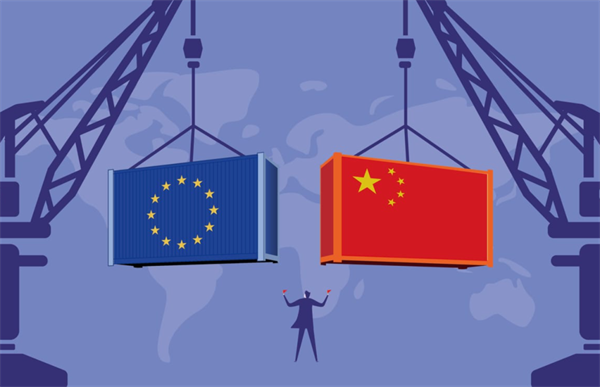
How Should China Deal with an EU That Has Lost Its Strategic Direction?
Recently, the second meeting under the China–EU Trade and Investment Consultation Mechanism resulted in consensus on a number of issues and produced several concrete outcomes. At the same time, however, the European Union has indicated that it intends to intensify restrictions on China even as consultations continue. It is also reportedly considering a new trade instrument, described as an “emergency kill switch”, that would allow it to block foreign products from entering the EU market.
In fact, the EU has introduced, and continues to contemplate, a range of discriminatory trade and investment restrictions targeting China in recent years. China has consistently engaged in consultations with the EU and exercised the utmost restraint. Nevertheless, as the EU continues to develop new discriminatory trade instruments targeting China, the Chinese side is also conducting targeted policy research, strengthening its legal framework for foreign-related matters, and making comprehensive preparations.
It can be expected that, should the EU misjudge the situation and provoke or escalate trade and economic frictions, China will respond swiftly with a range of countermeasures to safeguard its national development interests and uphold the rules of the multilateral trading system.
The EU’s Challenges Are Fundamentally Rooted in Its Own Internal Problems
Europe is an important pole in a multipolar world. China has repeatedly expressed its support for European integration, for a stronger and more united European Union, and for Europe to play a more active role in international affairs.
In recent years, however, the EU has experienced declining industrial competitiveness, weakening internal cohesion, and increasingly pronounced internal tensions. Its leadership appears unable to form a clear assessment of the situation or to formulate and implement effective strategies.
Both China and the EU face complex geopolitical environments in their respective neighbourhoods. China, with strong strategic resolve, has firmly sought to prevent conflict and instability in its surrounding region, thereby creating a peaceful environment conducive to sustained medium-to-high-speed economic growth for itself and neighbouring economies.
By contrast, the EU has, to a considerable extent, lacked both the strategic autonomy and the political will necessary to maintain stability in its neighbourhood. Recurring conflicts in surrounding regions have driven up energy costs and increased social and economic burdens.
On the economic front, the EU was among the earliest regions to advocate and develop a low-carbon economy. Germany’s Industry 4.0 initiative also recognised at an early stage the need to advance an industrial revolution centred on intelligent manufacturing.
However, these strategic visions have not been effectively implemented. The EU has struggled to advance the green and digital transformation of its industries and has fallen significantly behind China and the United States, particularly in artificial intelligence.
The EU’s security and development challenges are therefore, to a large extent, the result of internal factors, especially shortcomings in its capacity to formulate and implement effective strategies.
Labelling China as engaging in “non-market practices” or causing “systemic market distortions”, and using such accusations as a pretext for discriminatory trade and economic restrictions, will not resolve the problems facing the EU.
Advancing China–EU Economic and Trade Relations Towards Greater Balance and Progress
The agreements and understandings reached at the recent second meeting of the China–EU Trade and Investment Consultation Mechanism, particularly the understanding concerning trade in hybrid vehicles, were the result of nearly one hundred rounds of intensive consultations. These achievements were hard-won.
Against the backdrop of the global manufacturing sector’s transition towards greener and more intelligent production, neither attempts to obstruct this transformation through trade and investment restrictions nor efforts to evade it by delaying decarbonisation agendas will prove effective.
China and the EU should instead pursue cooperation to promote a more balanced and mutually beneficial bilateral trading relationship and advance economic and trade ties.
Compliance with World Trade Organization (WTO) rules is an essential prerequisite for resolving trade disputes between the two sides.
On this basis, both sides emphasised and reaffirmed three principles for addressing the issue of hybrid vehicle trade: compliance throughout the entire process, respect for facts, and non-discrimination.
In accordance with these principles, the two sides reached arrangements that build upon the 2025 baseline and provide for improved market access, ensuring sufficient export opportunities and stable growth for Chinese enterprises. At the same time, the quota allocated to China will be no lower than that granted to any other source of imports into the EU.
Under Article 5 of the WTO Agreement on Safeguards, bilateral agreements constitute one of the mechanisms through which safeguard measures may be implemented.
The three principles agreed upon by China and the EU, together with the related arrangements, are binding.
We have noted that recent reports concerning the EU’s proposed safeguard measures on hybrid vehicles have raised serious concerns among several of the EU’s free trade partners.
This development was anticipated by the Chinese side and further demonstrates the importance and necessity of the three principles that China consistently advocated and that both sides ultimately confirmed.
China will closely monitor the measures adopted by the EU to ensure that they comply not only with WTO rules but also with the understandings and arrangements reached between the two sides.
China also reserves a range of options under WTO rules, including seeking trade compensation, initiating dispute settlement proceedings at the WTO, and adopting countermeasures, and will respond as circumstances develop.
China–EU economic and trade relations are undergoing a transition from a traditional model of vertical international division of labour towards a more horizontal division of labour. This shift towards a horizontal structure will be the overarching trend in bilateral economic and trade relations for some time to come.
Against this backdrop, the specific forms of China–EU economic cooperation will continue to evolve.
The EU runs a trade deficit with China in goods. At the same time, European-invested enterprises operating in China produce substantial quantities of goods for the Chinese domestic market.
In other words, the EU accesses the Chinese market through both trade and investment.
By comparison, the scale of Chinese-invested enterprises producing and selling goods locally within the EU remains relatively limited.
Under a horizontal model of international division of labour, there is considerable scope for China to expand its horizontal investment in Europe, particularly market-seeking investment.
China’s 15th Five-Year Plan calls for greater integration of trade and investment. This provides an important avenue for China and the EU to achieve a more balanced economic relationship at a higher level of development.
The EU should refrain from introducing discriminatory investment restrictions or imposing forced technology transfer requirements.
Subject to the protection of intellectual property rights and compliance with China’s relevant regulations governing technology imports and exports, China encourages technological exchanges, cooperation, and technology transfers between China and the EU in the new energy sector.
Such cooperation would support the development of the EU’s new energy industries and serve the common interests of both sides.
China’s Economic and Trade Policy Towards the EU Is Clear, Consistent and Firm
China’s economic and trade policy towards the EU is clear, consistent and firm. There is no uncertainty about China’s position.
China is committed to maintaining and developing a stable and balanced relationship with the EU as a key trading partner. It seeks to expand two-way investment, increase imports from the EU, and broaden cooperation in emerging sectors.
At the same time, we have noted a series of recent signals from the EU, including references to “closing the market” and introducing an “emergency kill switch”.
These extreme expressions do not reflect spontaneous public sentiment within the EU. Rather, they have come directly from European politicians.
Regardless of the specific mechanisms through which such proposals might be implemented, they are unlikely to comply with the fundamental principles of the WTO. They would not only seriously undermine bilateral economic and trade relations but also damage the multilateral trading system.
In recent years, China has accumulated extensive experience in responding to trade protectionism.
Building on the newly revised and implemented Foreign Trade Law, as well as important legislation introduced and implemented in recent years, including the Export Control Law and the Anti-Foreign Sanctions Law, China has developed a comprehensive set of policy instruments.
These range from anti-discrimination investigations and investigations into industrial and supply chain security to export controls and reciprocal import restrictions.
This legal framework also provides stronger support for Chinese enterprises, other organisations and individuals seeking to protect their legitimate rights and interests through legal means.
While actively pursuing bilateral consultations to resolve differences, China is closely monitoring and studying the EU’s policy developments and has prepared a range of targeted countermeasures.
In response to the restrictive trade and economic measures that the EU has introduced against China over recent years, China has exercised the utmost restraint in the broader interest of preserving the China–EU relationship as key trading partners.
Nevertheless, China has sufficient countermeasures at its disposal. Its determination to uphold the multilateral trading system is unwavering, as is its determination to safeguard China’s national interests and the legitimate interests of Chinese enterprises.
Threatening signals from the EU, such as references to “closing the market” or introducing an “emergency kill switch”, may sound forceful, but they merely expose the protectionist nature of the thinking behind them.
Such threats will neither interfere with nor exert pressure on China’s negotiating position.
China has always maintained that it does not seek confrontation, but neither does it shy away from it.
Any protectionist measures that harm China’s interests, or discriminatory measures targeting China that substantively violate multilateral trade rules, will be met with a resolute response from China.