

Phoenix News Editor’s Note
At their September summit, the Chinese and US presidents agreed to build a “constructive relationship of strategic stability based on respect, fairness and reciprocity.” This new understanding is gradually taking shape through arrangements in trade, artificial intelligence and security.
On September 28, China announced the outcomes of the eighth round of China-US economic and trade consultations. The arrangements for mechanisms such as the China-US Trade Council and Investment Council were further clarified, while the framework for reciprocal tariff reductions worth $30 billion was developed in greater detail. The two sides also agreed to establish an AI dialogue mechanism, with the next exchange planned for November. Their militaries agreed to work towards a memorandum of understanding on crisis communication and prevention as soon as possible.
Against this backdrop, can Washington’s cautious approach to Taiwan develop into more binding commitments? How will the “irreplaceability” of Chinese supply chains shape future China-US economic relations? Can cooperation on AI move beyond technological competition into applications and risk governance? And with the US midterm elections approaching, what new variables might emerge in Trump’s China policy?
In this exclusive interview, Phoenix Global Insight speaks with Professor Wu Xinbo, Dean of the Institute of International Studies and Director of the Center for American Studies at Fudan University.
Key Takeaways
1. The September China-US summit added “respect, fairness and reciprocity” to the concept of a “constructive relationship of strategic stability.” This formulation grew out of the principles of equality, respect and mutual benefit that guided earlier trade negotiations. Principles originally applied to economic relations are now being extended to the overall bilateral relationship, providing a clearer framework for cooperation, competition and the management of differences.
2. On Taiwan, Wu argues that China should raise the costs for the United States when Washington takes actions that undermine China’s interests. Whether the US adopts “strategic clarity” or “strategic ambiguity,” China should retain the strategic initiative.
3. On trade, China’s “irreplaceability” extends across the entire supply chain. For the United States, talking about “decoupling” or “de-risking” is much easier than actually achieving it. Wu expects US economic policy towards China to become more pragmatic and targeted, reducing dependence in areas considered sensitive to national security where alternatives are available, while maintaining trade in less sensitive sectors.
4. On AI, China and the United States have considerable room for cooperation beyond technological competition, including applications, commercialisation and risk governance. Wu sees the “zero-sum mentality” of American policymakers as the main obstacle. In AI safety, he argues, cooperation is not a matter of choice but a necessity. However, the involvement of numerous non-state actors makes AI risk governance particularly difficult.
5. On regional conflicts, Wu warns that US secondary sanctions targeting Chinese financial institutions could have the effect of a “financial nuclear bomb,” with consequences for the international position of the dollar. He believes Washington would have to weigh these risks carefully. He also sees opportunities for China-US cooperation on Iran, the Strait of Hormuz, Ukraine and the Korean Peninsula.
6. With the midterm elections approaching, Trump still needs a “success story” in his relationship with China. Progress on trade and other bilateral issues would allow him to present diplomatic achievements to American voters. However, changes in US domestic politics could increase pressure over values, Chinese investment and Taiwan.
Interview by: Song Dongze, Chief International Affairs Writer, Phoenix News
Edited by: Qu Gongze and Cen Yizhuo
Where Did the Six Words “Respect, Fairness and Reciprocity” Come From?
Phoenix Global Insight: The latest China-US summit has expanded the meaning of a “constructive relationship of strategic stability” by adding the principles of “respect, fairness and reciprocity.” When the two presidents agreed in May to build a constructive relationship of strategic stability, you described it as a shift from “tactical stability” to “strategic stability.” How do you assess this latest development? What does it mean for China-US relations going forward?
Wu Xinbo: The principles of “respect, fairness and reciprocity” come from the six Chinese characters meaning “equality, respect and mutual benefit” that were put forward during the China-US trade negotiations. China essentially conducted those negotiations in accordance with these principles. That is why the talks made progress and why the economic relationship stabilised. Now, however, the two sides need to stabilise not only their economic relationship but the entire China-US relationship. During Trump’s visit to China in May, the two countries reached an understanding on building a constructive relationship of strategic stability. The logic behind the latest formulation is the same. If equality, respect and mutual benefit are necessary to stabilise economic relations, then the same principles should apply to the broader bilateral relationship. There has been a slight adjustment in the wording. “Equality, respect and mutual benefit” has become “respect, fairness and reciprocity.” After the May meeting in Beijing, the White House actually used the terms “fairness” and “reciprocity” in its statement. These terms were consistent with the principles China had advocated during the negotiations. The English word “reciprocity” can be translated into Chinese as either “对等” or “互惠.” The nuances are slightly different, but the underlying meaning is broadly similar. So I believe the new six-character formulation draws directly on the principles China followed during the trade negotiations. After discussions between the two sides, these principles have now been extended to the overall China-US relationship in pursuit of strategic stability. We should also recognise that the United States attaches considerable importance to such concepts and formulations. During his welcoming remarks at the White House, Trump specifically mentioned that he and President Xi had established a “great friendship based on mutual respect and the fundamental interests of the two peoples.” So the American side is also talking about mutual respect and the fundamental interests of both peoples. That naturally brings in questions of fairness and reciprocity. These six words therefore reflect the latest China-US understanding on building a constructive relationship of strategic stability.
Phoenix Global Insight: You previously argued that, under the framework of constructive strategic stability, Washington has adopted a more cautious approach to Taiwan than in the past, which has helped maintain overall stability. With the addition of “respect, fairness and reciprocity,” do you think this American caution over Taiwan could develop into more binding policy commitments?
Wu Xinbo: I think the United States must move in that direction, for two reasons. The first is not really about the principles themselves, because principles alone cannot constrain the Americans. What matters more is that President Xi clearly explained China’s position on Taiwan during his visit to the United States. He made three main points. First, China’s position on safeguarding national reunification and territorial integrity is very clear. We are pursuing national reunification. Second, China hopes the United States will maintain what we regard as the correct position of opposing “Taiwan independence.” Since Trump’s visit to China, he has been relatively cautious in handling the Taiwan issue. Third, properly handling Taiwan is a solid foundation for China-US strategic cooperation and the development of bilateral relations. In other words, if the Taiwan issue is not handled properly, there can be no strategic stability between China and the United States, nor can bilateral relations and cooperation develop. That is a clear message about the consequences. The second reason is that China has cards to play. If the United States retreats from its position on Taiwan and damages China’s core interests, it will suffer substantial losses in its relationship with China. So when we talk about “respect” in the phrase “respect, fairness and reciprocity,” the first requirement is respect for China’s core interests, especially on Taiwan. Before President Xi’s visit to the United States, Ambassador Xie Feng published an article in People’s Daily discussing China’s four red lines in China-US relations. President Xi had previously raised these with Biden as well. They concern Taiwan, democracy and human rights, China’s political system and development path, and China’s right to development. I therefore believe these six words provide a clearer framework for how China and the United States should cooperate, the limits of their competition, and how their differences should be managed. They cover all these dimensions.
Whether Washington Chooses “Strategic Ambiguity” or “Strategic Clarity,” China Holds the Initiative
Phoenix Global Insight: Let us turn to specific issues concerning the Taiwan Strait. US arms sales to Taiwan have long been an important factor affecting China-US relations. Around Trump’s visit to China in May, he described a proposed arms sale to Taiwan worth approximately $14 billion as a potential bargaining chip in negotiations with China. US officials subsequently claimed that the sale would not depend on China’s actions. This once again highlights the difficulty of resolving the issue. Diplomatic protests have often failed to prevent Washington from continuing arms sales. How should China respond to prevent the United States from treating arms sales to Taiwan as bargaining chips?
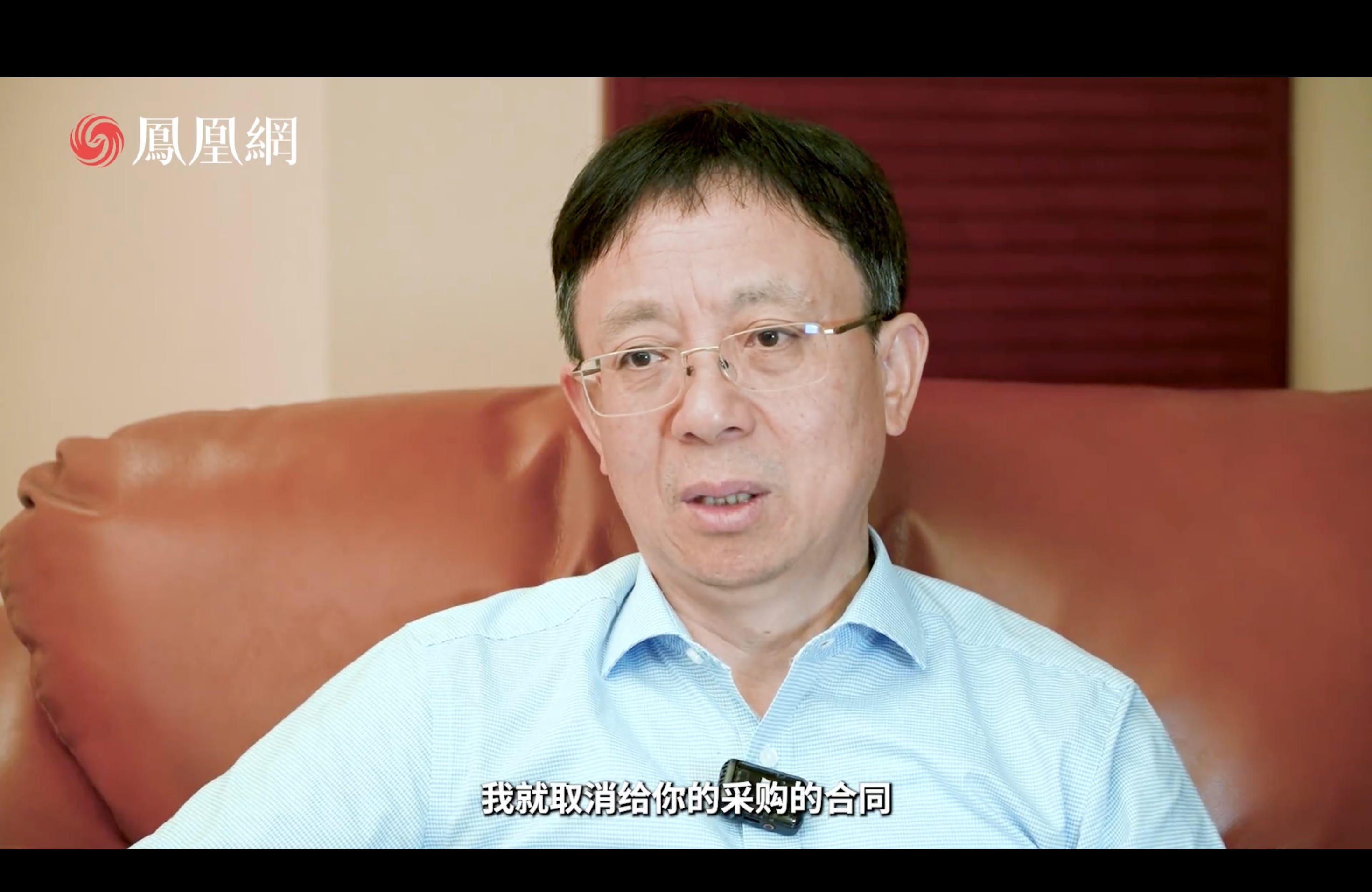
Wu Xinbo: In the past, our responses have generally included diplomatic protests, sanctions against certain American companies and individuals, and military exercises around the Taiwan Strait to exert pressure. But it now appears that these measures have not been strong enough. They have not imposed costs on the United States that it genuinely feels. I think we need to increase the economic and security costs for the United States when it takes such actions. For example, if the United States sells $1 billion or $2 billion worth of weapons to Taiwan, China could cancel procurement contracts with American companies worth two or five times the value of those arms sales. That would impose a real economic cost on the United States.
Phoenix Global Insight: Beyond arms sales, the broader direction of US strategy towards Taiwan has also attracted considerable attention. In recent years, some voices in the United States have called for abandoning so-called “strategic ambiguity.” Meanwhile, Washington has continued arms sales to Taiwan, promoted joint development of unmanned systems through the National Defense Authorization Act, deepened military technology cooperation, and considered expanding Taiwan’s participation in regional military exchanges. Does this suggest that the United States is gradually abandoning strategic ambiguity? What implications could such a shift have for the Taiwan Strait?
Wu Xinbo: I don’t think we should be overly concerned about whether the United States adopts strategic clarity or strategic ambiguity. We should not allow ourselves to be led around by Washington. The key to the Taiwan issue is that China must retain the initiative and control over its own decisions. What does that mean? It means having sufficient strength and determination to handle and resolve the Taiwan issue in the way we consider most appropriate. The United States should have to adjust its policies according to China’s choices, rather than China’s Taiwan policy being determined by whether Washington chooses strategic clarity or ambiguity. Look at Biden. During his four years in office, he stated on four occasions that the United States would defend Taiwan if a conflict broke out. That sounded like strategic clarity. Trump no longer says that. He has returned to strategic ambiguity. But Biden’s strategic clarity was not necessarily all that clear, and Trump’s strategic ambiguity may not be all that ambiguous. What do I mean? Biden said the United States would defend Taiwan. But if a conflict actually broke out, would Washington really intervene? Could it win? Could it afford the costs? Trump, meanwhile, refuses to say whether the United States would intervene. But I believe he understands very well that American intervention in a cross-strait conflict would have little prospect of success and would come at an enormous cost. So I don’t think we should pay too much attention to whether Washington calls its policy clear or ambiguous. The important thing is that the Taiwan issue remains in China’s hands. We must retain the initiative.
TSMC’s US Expansion Could Backfire on Taiwan
Phoenix Global Insight: Taiwan’s semiconductor industry is also becoming an increasingly important factor in China-US competition. On September 2, Taiwan announced that local companies planned to invest an additional $20 billion in the United States. Previously, TSMC had expanded its planned US investment to $265 billion. Under pressure from Washington, Taiwan’s advanced semiconductor industry is becoming more deeply integrated into US supply chains. The United States is deliberately linking technological competition with the Taiwan issue. How might this affect the Taiwan Strait and China-US relations?
Wu Xinbo: I think the American motivation is quite straightforward. The United States is worried that a conflict in the Taiwan Strait could disrupt the reliability of its semiconductor supplies. So its main concern is supply security. In effect, Washington is saying: you cannot simply manufacture chips in Taiwan and sell them to us. You need to manufacture them in the United States so that we can feel secure. Now, Taiwan may believe that by cooperating with Washington, building factories in the United States and addressing American supply-chain concerns, it is offering the United States a valuable gift. Taiwan may think this will bring it closer to Washington and encourage the United States to provide stronger support. But I think the outcome could be exactly the opposite. Traditionally, the United States has valued Taiwan partly for geopolitical reasons. But today, particularly for Trump, the main concern is advanced semiconductors. If Taiwanese companies can produce enough advanced chips in the United States to meet American demand, then Washington no longer needs to worry so much about risks in the Taiwan Strait. That would substantially reduce Taiwan’s value to the United States. Taiwan originally hoped that investing in semiconductor manufacturing in America would secure greater American protection. But the result could be that Taiwan actually reduces its own strategic value. Trump might simply think: as long as my chip supply is secure, who cares what happens to Taiwan? So Taiwan could end up making a costly miscalculation. It may try to gain an advantage but end up worse off.
Decoupling Is Easy to Talk About but Difficult to Achieve: China’s “Irreplaceability” Goes Far Beyond Expectations
Phoenix Global Insight: Moving from semiconductors to the broader China-US economic relationship, you previously argued that a country’s resilience in economic competition cannot be measured by trade volumes alone. We also need to consider how difficult it is to replace that country in critical sectors. Where do you think China’s “irreplaceability” is most evident today?
Wu Xinbo: I think China’s irreplaceability can be found in many areas, across almost the entire supply chain, from upstream to midstream and downstream industries. At the upstream level, people immediately think of rare earths, critical minerals and active pharmaceutical ingredients. These are areas where the United States depends on Chinese supply chains. But there are also large numbers of intermediate products that the United States cannot do without. Take America’s AI infrastructure expansion. The United States is building thousands of data centres. Those facilities require all kinds of computer equipment and electrical systems, many of which have to be imported from China. So the United States remains dependent on China. The same is true in advanced manufacturing, including robotics and drones. I would say China’s irreplaceability goes far beyond what many of us imagine. And the United States is becoming increasingly aware of this reality, sometimes painfully so.
Phoenix Global Insight: Despite Washington’s efforts to remove China from its supply chains, bilateral trade has not moved towards complete decoupling. How do you think this situation will evolve? What changes might we see in the economic relationship?
Wu Xinbo: I think slogans such as decoupling and de-risking are much easier to proclaim than to implement. As I just explained, the United States is discovering that it depends on China across almost every part of the supply chain. So it cannot completely decouple, nor can it fully remove China from its supply chains. I therefore expect future US economic policy towards China to become increasingly pragmatic. Washington will need to redefine the boundaries of its economic relationship with China. What does that mean? There will be areas where the United States believes it must reduce dependence on China for so-called national security reasons, and where it actually has the ability to do so. There will be other areas where Washington wants to reduce dependence but cannot realistically achieve it. In those cases, it will have to compromise and find some kind of middle ground. And there will be non-sensitive sectors, unrelated to military conflict, where decoupling is unnecessary and the risks are limited. Trade and economic cooperation can continue in those areas. So I think US economic policy towards China will have to become more pragmatic and more precisely targeted. It will need to establish new boundaries for the relationship.
Phoenix Global Insight: So China-US economic relations may evolve into a state of partial decoupling?
Wu Xinbo: During the Biden administration, the US Secretary of Commerce visited China and made a remark in Shanghai. She said that only about 1% of China-US trade was problematic, while the other 99% was not. So if decoupling is necessary, perhaps only 1% truly needs to be decoupled, and only in areas where the United States can actually achieve it. The remaining 98% or 99% does not need to be decoupled. That gives us a clearer boundary and helps redefine how the two countries should manage their economic relationship. This is extremely important for the stability and predictability of China-US trade.
The Biggest Obstacle to China-US AI Cooperation Is America’s “Zero-Sum Mentality”
Phoenix Global Insight: Beyond trade, technology has become increasingly important in China-US relations. Competition over advanced semiconductors and AI continues to intensify. The repeated adjustments to US export policies for Nvidia AI chips illustrate Washington’s dilemma: it wants to restrict China’s access to advanced computing power, but it cannot completely ignore the commercial interests of American companies. As technological competition intensifies, is there still room for limited China-US cooperation on AI? Or will broader strategic rivalry make meaningful cooperation increasingly difficult?
Wu Xinbo: If we look at the situation objectively, China and the United States are already cooperating in AI, and they need to cooperate more in the future. The problem is that American policymakers largely approach the development of the Chinese and American AI industries with a zero-sum mentality. They believe that the United States must not only maintain its technological lead but also do everything possible to suppress China and slow down the development of its AI industry, both technologically and commercially. As a result, the cooperation that already exists between the two countries has not received the recognition it deserves, and the potential for further cooperation has not been fully realised. If we look at the possibilities for cooperation, AI can broadly be divided into three areas: technological development, applications and commercialisation, and governance and risk management. China and the United States are already cooperating in all three areas. Take technological development. The United States is ahead in AI technology, but China has also made important contributions. For example, more and more American AI companies are using models developed by Chinese AI companies. Many of these models are open-source and relatively inexpensive, so an increasing number of American businesses are choosing to use them. On the application side, I think we will see even more opportunities for cooperation. China has moved quickly in applying AI, particularly in robotics and advanced manufacturing. These are areas where China has strengths that the United States needs. Then there is governance. The development and application of AI will bring many risks. As two of the world’s leading countries in AI, China and the United States must discuss what risks these technologies create, how to identify them, how to manage them, and how to cooperate in addressing them. So there is actually enormous room for China-US cooperation in AI. The main problem is that American policymakers are too narrow-minded. They constantly think that maintaining America’s lead requires suppressing China’s development. As a result, they ignore both the reality of existing cooperation and the need for further cooperation. That, in my view, is the biggest obstacle.
Phoenix Global Insight: You just mentioned that China and the United States have room to cooperate in preventing AI risks. Some observers believe the two countries already share certain concerns about extreme AI risks. For example, neither wants powerful AI systems to be misused by terrorist organisations or other malicious actors. Could preventing such risks provide an entry point for China-US cooperation on AI safety?
Wu Xinbo: I think addressing AI risks is precisely where China and the United States need to cooperate. This is not a question of whether they want to cooperate. They have to cooperate. AI development is bringing many disruptive challenges, and humanity has not yet fully understood the risks involved. As more potential risks emerge, the issue will require increasing attention from the international community, especially China and the United States. AI risks also have some unique characteristics. The actors involved may not be states at all. They could be individuals, organisations or companies. That makes the risks much harder to control, because there are simply too many non-state actors. And AI is still at a very early stage of widespread application. We do not yet know how many different kinds of harm, including potentially disruptive or catastrophic consequences, could emerge in the future. There is still an enormous amount of work to be done. That is why governing AI risks will be an extremely complex and difficult task.
The US Must Bear the Consequences of Secondary Sanctions Against Iran; Regional Issues Could Offer Opportunities for China-US Cooperation
Phoenix Global Insight: Looking at the broader international situation, regional conflicts such as the Russia-Ukraine war and the US-Iran conflict are also affecting China-US relations. On August 24, the United States announced an “economic isolation campaign” against Iran, introducing secondary sanctions that could affect third-party markets, including mainland China and Hong Kong. At the same time, US sanctions against Russia continue to affect normal economic and trade relations between China and Russia. For China, this means that even ordinary commercial activities face growing exposure to secondary sanctions. How should China protect its legitimate economic relationships without becoming constrained by the US sanctions system? And how might the spillover effects of these sanctions reshape China’s broader external economic strategy?
Wu Xinbo: Let’s take the US-Iran conflict as an example. The United States wants to intensify sanctions and has even threatened to take action against China. I think China’s position should have two elements. First, we should oppose American sanctions and make clear to Washington that these measures are unjustified and have no basis in international law. On Iran, during the Obama administration, an agreement was reached with the support of China and other countries. It was the United States that subsequently withdrew from that agreement unilaterally, violating international law. Then, last year and again this year, the United States unilaterally launched military attacks against Iran. So, in my view, the United States has violated international law and acted as an aggressor. It is neither legally nor morally justified in its approach to Iran. Under these circumstances, its sanctions are unreasonable and cannot be accepted by the international community. The second issue concerns the consequences if Washington targets Chinese financial institutions or major state-owned banks. We need to explain very clearly to the United States what such actions would mean. China is the world’s largest trading nation. A large share of our international trade is settled in US dollars, and we also hold hundreds of billions of dollars in US debt securities. China therefore plays an important role in supporting the international position of the dollar and the market for US government debt. If the United States sanctions Chinese banks, that would be like detonating a financial nuclear bomb. And if the result is an acceleration of China’s move away from the dollar, the United States will have to bear the consequences. China is a major economic, trading and financial power. If an economy of China’s size begins moving away from the dollar, Washington had better think carefully about the implications. We need to make these consequences clear to the Americans. As I said earlier, Americans know how to calculate costs and benefits. They understand what is at stake.
Phoenix Global Insight: Beyond the economic consequences of sanctions, regional conflicts such as the Russia-Ukraine war and the US-Iran conflict continue to affect global security. Although China and the United States disagree on some of these issues, they still share interests in preventing conflicts from spiralling out of control and maintaining energy and shipping security. Could the two countries cooperate in practical ways on these issues?
Wu Xinbo: I think the most urgent issue right now is the US-Iran conflict and the situation in the Middle East. The question of passage through the Strait of Hormuz affects global energy supplies and the direction of the world economy. Is there room for China-US cooperation here? Of course there is. For China, reopening the Strait of Hormuz and restoring freedom of navigation serve our interests, as well as those of the overwhelming majority of countries around the world. So we want freedom of navigation through the Strait to be restored as soon as possible. On the one hand, China can work with Iran. We should make clear that the Strait of Hormuz must not be held hostage to the US-Iran conflict. It is an international waterway, and disruptions there have consequences far beyond the countries directly involved. On the other hand, we also need to work with the United States. We should tell Washington that launching unilateral military attacks against Iran was wrong, that it needs to acknowledge its mistake and correct its policies. That means not launching further attacks and not continuing economic sanctions. If compensation is necessary, it should provide compensation. If guarantees against future military action are needed, it should provide those guarantees. Only then can Iran develop sufficient trust in the United States to reach a new agreement. So I think China should engage with both sides. We need to work with Iran, but even more importantly, we need to work with the United States. That is how China can play a constructive role.
Phoenix Global Insight: Apart from Iran, which other regional issues might provide opportunities for limited China-US cooperation?
Wu Xinbo: I think the Russia-Ukraine conflict and the Korean Peninsula are both areas where China and the United States could cooperate. On Ukraine, Trump has launched another round of diplomatic efforts, and the parties involved in the negotiations have sent some positive signals. If the directly involved parties become willing to sit down and negotiate, China could work with other countries to play a constructive role. Any eventual settlement of the Russia-Ukraine conflict is unlikely to be purely bilateral. It would probably need to be a multilateral agreement, with the United States, China and other major countries potentially acting as guarantors. In that sense, it could resemble the Iran nuclear agreement reached during the Obama administration. China could certainly make a constructive contribution to such a process. The Korean Peninsula is another example. We can see that South Korea’s Lee Jae-myung administration wants to improve inter-Korean relations and advance the peace process on the peninsula. Trump has also repeatedly expressed interest in meeting the North Korean leader to discuss improving US-North Korea relations. China could use its friendly relations with North Korea to play a positive and constructive role, including facilitating communication and offering proposals for the parties to consider. So I believe there are many international and regional issues on which China and the United States could cooperate. In the past, particularly during Trump’s first term, his foreign policy agenda was rather narrow. When it came to China, he was mainly interested in trade. In his second term, fentanyl was added to the agenda. But now it appears there are more issues than that. With the Iran situation, the United States seems to want China’s help in resolving problems. China could also play a role in Ukraine. As two major powers, China and the United States naturally have extensive opportunities for cooperation in international and regional affairs. If we can continue expanding cooperation on third-party issues through leader-level diplomacy, we will broaden the areas of cooperation in the bilateral relationship. That would create additional positive momentum for the stability and development of China-US relations.
With the Midterm Elections Approaching, Trump Wants to Turn China-US Relations into a Foreign Policy Success Story
Phoenix Global Insight: Finally, let’s turn from regional conflicts back to American domestic politics. The United States will hold its midterm elections this November. As the elections approach, how much room does Trump still have to adjust his China policy and negotiate with Beijing?
Wu Xinbo: I think Trump still depends heavily on presenting his China policy as a success. What he wants to say is: look how well I have handled the relationship with China. This is one of my foreign policy achievements. So he needs not only to stabilise the relationship but also to demonstrate progress. For example, achievements in trade or cooperation on drug enforcement are things he can present to American voters as evidence of his success.
Phoenix Global Insight: If the Democrats regain control of Congress after the midterm elections, how much could that affect Trump’s China policy during the second half of his second term? And looking further ahead, how might it shape US policy towards China after Trump leaves office?
Wu Xinbo: If the Democrats take control of the House of Representatives, I think the impact on China-US relations could be felt in three main areas. The first concerns values. Democrats may criticise Trump for treating relations with China primarily as a matter of doing business, while paying insufficient attention to human rights, democracy and values. They may argue that these issues must be given greater priority. So they could play the values card, creating additional political pressure. The second area concerns Chinese investment in the United States. Trump may consider using the proposed China-US Investment Council to encourage more Chinese investment in America. From his perspective, this would be good for the US economy. Chinese investment could create jobs and generate tax revenue. But Democrats, partly because of their ties to organised labour, may be concerned about Chinese investment, particularly in the American automotive industry. We have already seen Democratic lawmakers write to Trump urging him not to open the US automobile market to Chinese manufacturers. During the Biden administration, the United States imposed 100% tariffs on Chinese electric vehicles to prevent them from entering the American market. Democrats may therefore demand much stricter scrutiny and restrictions on Chinese investment. That is the second possible impact. The third area is Taiwan. Since the May summit between the Chinese and American presidents, Trump has generally handled Taiwan rather cautiously, including on arms sales. If the Democrats return to power in Congress, they may argue that improving relations with mainland China must not come at Taiwan’s expense. They may invoke the Taiwan Relations Act and argue that the United States is obligated to provide Taiwan with weapons. They could therefore press Trump to approve further arms sales. That would also affect how the Taiwan issue is handled. There may be other areas of impact, but I think these three would be the main ones.
Phoenix Global Insight: How much influence can Congress actually exert over Trump? After all, his willingness to disregard Congress seems almost unprecedented.
Wu Xinbo: Foreign policy is largely the responsibility of the executive branch, particularly the president. Congress can make noise and apply pressure, but ultimately Trump makes the decisions. What concerns me is the possibility that, after the midterm elections, the Democrats return to power and intensify their political confrontation with Trump. That could make Trump even more dependent on support from his Republican colleagues in Congress. And there are quite a few pro-Taiwan figures within the Republican Party. They might say to him: “Mr President, we can support you, but you need to sell Taiwan some weapons. It has been quite a while since the last major sale.” Trump may not necessarily listen to what Democrats say. But when Republicans make such demands, he may find it much harder to ignore them. That is one possible scenario. In other words, pressure from the Democrats could ultimately be transmitted through the Republican Party.
Phoenix Global Insight: Thank you, Professor Wu Xinbo, for this in-depth discussion, which has helped clarify the dynamics of China-US competition and cooperation across the Taiwan Strait, trade, technology and global governance.