

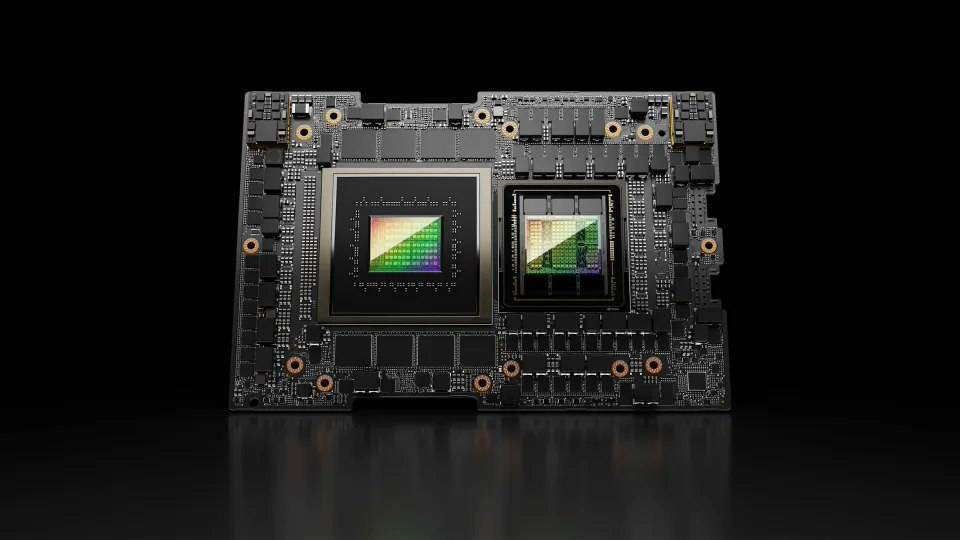
As the Trump administration lifted the export ban on the H200, a debate has begun inside China over whether the chip should be allowed into the country.
The Chinese government’s position remains deliberately ambiguous.
In his announcement post, Trump claimed that President Xi Jinping had responded positively to the decision.
According to media reports, the National Development and Reform Commission (NDRC) and the Ministry of Industry and Information Technology (MIIT) summoned major Chinese tech companies—including Alibaba Group—today to assess their demand for the H200. The government is expected to inform these companies of its final decision soon after consolidating their feedback. According to people familiar with the matter, three considerations are guiding Beijing’s approach:
Approval to purchase H200 chips must not undermine China’s long-term goal of achieving technological self-sufficiency. Any purchase of U.S. high-end chips would be viewed strictly as a temporary measure to ease the shortage of advanced training GPUs.
One option under discussion is limiting the number of H200 chips that firms are allowed to purchase, tying the quota to the amount of domestic chips they procure and deploy.
The government is expected to convey its decision through “window guidance” rather than public announcement.
The Ministry of Foreign Affairs offered a brief response.
At the December 9 press briefing, spokesperson Guo Jiakun was asked by a Bloomberg reporter whether China would allow purchases of the H200, and whether Trump had communicated the decision directly to Beijing or engaged in a phone call with Chinese leadership.
Guo replied: “We have noted the relevant reports. China has always advocated mutually beneficial cooperation between China and the United States.”
In my view, the final line reflects a notably positive attitude and subtly signals that Beijing views this issue as falling within the categories of “China–U.S. cooperation” and “win–win outcomes.”
This stands in stark contrast to the government’s tone regarding the earlier lifting of restrictions on the H20 chip.
For comparison, the Ministry of Commerce’s response to the H20 issue took a very different stance:
At a recent press briefing, the spokesperson of China’s Ministry of Commerce responded to a question regarding the U.S. approval of NVIDIA’s H20 chip sales to China.
A reporter asked:
Recently, U.S. officials have stated that the approval of NVIDIA’s H20 chip sales to China is part of the U.S.–China economic and trade negotiations. They also claimed that Chinese companies such as Huawei have already produced equivalent chips, and that the U.S. does not want China to achieve domestic substitution. What is the Ministry’s comment?
The spokesperson replied:
Following the U.S.–China economic and trade meeting in London, both sides have maintained close communication, confirmed the details of the London framework, and advanced its implementation. China has, in accordance with the law, approved export applications for controlled items that meet the required conditions. In early July, the U.S. correspondingly removed certain China-related restrictions connected to the talks.
We have noted that the U.S. has recently stated again that it will approve sales of NVIDIA’s H20 chips to China. China believes that the U.S. should abandon zero-sum thinking and continue removing a range of unreasonable economic and trade restrictions targeting China.
Mutually beneficial cooperation is the right path for China and the United States; suppression and containment lead nowhere. In May, the U.S. issued new export-control guidelines targeting Huawei’s Ascend chips, imposing stricter restrictions on Chinese chip products under unfounded accusations, and using administrative measures to interfere with fair market competition, which has seriously harmed the legitimate rights and interests of Chinese enterprises. China has made its position clear and firmly opposes such actions.
We hope the U.S. will work with China in the same direction, correct its erroneous measures through equal consultation, create a favorable environment for mutually beneficial cooperation between the two countries’ enterprises, and jointly safeguard the stability of the global semiconductor supply and industrial chains.”
When a Reuters reporter asked whether China had instructed domestic firms to avoid using H20 chips—especially in government or national security–related workloads—spokesperson Lin Jian responded: “I am not aware of the situation you mentioned.
Meanwhile, several KOLs and industry experts have begun commenting on the issue.
Hu Xijin, a well-known Chinese media figure with a large following, wrote an article arguing that the decision to allow the H200 into China is a “strategy in plain sight”(阳谋) by the United States.
In his view, Washington’s goal is to keep Chinese companies using — and even becoming dependent on — American chips. This would not only expand U.S. companies’ profits, he argued, but also weaken China’s motivation and urgency to develop its own semiconductor technologies.
Hu wrote that even if the Chinese government eventually allows limited purchases of the H200 or other U.S. chips, such purchases must align with China’s broader high-tech development agenda. He stressed that every chip order must accelerate China’s technological progress and must not erode the country’s determination to build independent capabilities. China, he said, will never return to a state of absolute dependence on U.S. chips or hand Washington control over its technological lifeline. Supporting China’s semiconductor sector — and supporting domestic leaders and challengers in other high-tech fields — should remain a long-term and unwavering commitment for Chinese society.
Another highly prominent figure in China’s telecommunications sector — and one of the most active “technology commentators” in the public sphere — Xiang Ligang, offered an even more direct assessment:
He argued that
NVIDIA has accumulated a large stockpile of H200 chips, including the H20, which is essentially identical in hardware. If these chips cannot be sold and remain stuck in inventory, NVIDIA’s financial problems will inevitably surface. This would not only hurt its revenue and profit figures but could also trigger a sharp drop in NVIDIA’s share price, with broader implications for the U.S. stock market. In his view, opening H200 sales to China is essentially NVIDIA clearing inventory — and, in a sense, trying to save the U.S. economy.
Xiang said he believes the H200 will face the same fate as the H20: “China will respond coldly, perhaps allowing only a tiny amount of imports, but large-scale purchases are impossible.”
NVIDIA wanting to sell the H200 to China is basically wishful thinking. China didn’t buy the H20 — not simply because of performance, but because of distrust and lack of necessity. The same distrust and lack of need apply to the H200.
Xiang elaborated further:
From China’s perspective, several core issues in the China–U.S. tech rivalry remain unresolved:
NVIDIA chips do not offer supply security. The U.S. can approve sales today and ban them again tomorrow. If China becomes dependent on American chips, it will never have secure supply. As long as the U.S. can weaponize export controls, reliance on American chips means China is vulnerable to coercion.
NVIDIA chips do not offer usage security. U.S. lawmakers and senior officials have publicly claimed that NVIDIA chips may contain backdoors enabling usage monitoring or control. If China were to deploy such chips at scale and come under U.S. oversight, how could China develop its own AI industry with confidence?
China is already capable of producing its own AI chips. In fact, China’s intelligent computing centers are operating normally. After China stopped purchasing the H20, there was no chip shortage and no supply crunch; some compute centers are even underutilized.
China is integrating computing power nationwide. With innovative scheduling technologies, China can coordinate compute resources across different regions, allocating more resources to where they are most needed. This reduces the need to build large numbers of standalone compute centers; instead, China can combine existing ones into a unified network.
Caixin also interviewed several industry insiders, and some expressed support for allowing H200 purchases in China.
Zhang Binlei, chief analyst at Zhenxin Hui, told Caixin that
NVIDIA once derived more than 30% of its revenue from China, and its China data-center chip business has dropped to zero under the export ban — a significant blow. Meanwhile, domestic AI chip companies have rapidly grown their revenue and accelerated their listings, creating a sense of “replacement pressure” for NVIDIA. At the same time, Chinese internet companies still need NVIDIA GPUs to train large-scale AI models, meaning that resuming NVIDIA’s chip shipments to China would benefit both sides.
A representative from a Chinese cloud provider told Caixin that domestic chips currently only reach performance comparable to the H20.
From a commercial standpoint, the H200 is undoubtedly the best option. Cloud vendors were previously willing to pay a premium even for the China-specific H20. Whether China can buy the H200 is therefore key; even at a higher price, NVIDIA chips still hold substantial value for model training. In practice, companies may pursue both paths — purchasing domestic chips while also competing for NVIDIA chips — training in parallel and catching up gradually.
He rejected claims of “NVIDIA ecosystem lock-in,” noting: “Back then, all computers were imported. Eventually everything became domestically produced.
Another cloud-vendor representative said domestic AI chips are already suitable for certain inference workloads, but in terms of large-model training, China still faces an overall compute shortage. It remains unclear which chip — domestic or foreign — will ultimately secure major market share.
A semiconductor consultant noted that
Based on revenue estimates, none of the domestic AI chipmakers have shipped more than 100,000 units. Even Ascend’s 500,000–1,000,000 shipments rely heavily on the government-driven “Xinchuang” market, while internet cloud providers account for a very small share. NVIDIA, by contrast, is primarily deployed in the cloud market. Domestic AI chips and NVIDIA overlap mainly in this segment, and no cloud provider currently treats domestic chips as their main choice. Because shipments are still small, even if the H200 enters China, domestic chips would still have ample room for growth. For example, Cambricon shipped 70,000–80,000 units in 2025 and expects about 150,000 next year — a doubling, but still from a very low base. Cloud vendors in China need at least 4 million GPUs, he said; in that context, domestic chips’ share is not high. The introduction of the H200 may not affect domestic chips in the short term, but in the long term it may strengthen reliance on NVIDIA’s ecosystem.
An analyst at a semiconductor design firm wrote on his personal blog that
Economically, there is no strong reason for China to block the H200. First, the H200’s performance — especially compute throughput and HBM bandwidth — is currently superior to domestic GPUs. Second, many legacy codebases, both overseas and domestic, are built on the Hopper architecture, meaning the H200 would be essentially plug-and-play — a major advantage for large tech firms. Third, according to Bernstein, domestic GPU production capacity will not see meaningful expansion until around 2027, suggesting China still faces a shortage of high-end AI accelerators.
However, he added
China’s leadership will not evaluate the issue solely through an economic lens. Political and strategic considerations will weigh heavily. Whether China allows H200 imports will depend on the trajectory of U.S.–China relations: if the two sides lean toward easing tensions, approval is more likely; if confrontation intensifies, Beijing may reject the import to signal toughness. Ultimately, he said, leaders will need to balance economic development with technological self-reliance.
What’s striking is that this isn’t really about chip performance or supply.
It’s about trust and control. When access can be granted and taken away through policy, dependence becomes a long-term risk, which explains the hesitation and the use of limits and quiet guidance.
Buy. Reverse engineer. Discard.