

At the end of 2025, China revised its Foreign Trade Law.
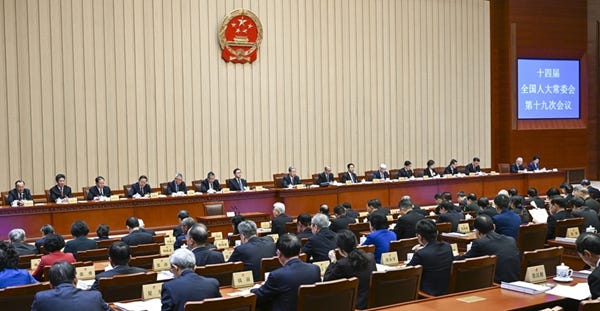
According to Xinhua, a meeting of the Standing Committee of the National People’s Congress voted on December 27 to adopt the revised Foreign Trade Law of the People’s Republic of China, which will take effect on March 1, 2026.
Since the launch of reform and opening-up in the late 1970s, China’s foreign trade has expanded rapidly and its international standing has risen sharply. In 1978, China’s total imports and exports amounted to about USD 20.6 billion, accounting for less than 1 percent of global trade. By 2018, the figure had reached USD 4.62 trillion, or 11.8 percent of the global total, making China the world’s largest trader in goods.
However, during the planned economy era, foreign trade was long conducted under a system of unified state operation, with import and export rights highly monopolized, and there was a lack of a unified legal framework and a fair competition environment. With the formal establishment in 1992 of the goal of building a socialist market economy, foreign trade governance urgently needed to shift from administrative control to rule-based management.
Against this backdrop, the Foreign Trade Law of the People’s Republic of China was drafted by the former Ministry of Foreign Economic Relations and Trade (对外经贸部), reviewed by the State Council, and submitted for deliberation. It was adopted on May 12, 1994, promulgated by then President Jiang Zemin through a presidential order, and took effect on July 1, 1994. This marked the first time China established a foundational legal framework governing foreign trade.
Since then, the law has undergone one comprehensive revision and multiple supplementary amendments. In particular, following China’s accession to the WTO in 2001, extensive revisions were made to align the law with WTO rules. The current revision represents the latest update.
In his explanation report of the draft amendments to the NPC Standing Committee, Minister of Commerce Wang Wentao outlined the international context behind the revision.
Unilateralism, protectionism, and bullying practices have intensified globally, and that certain countries have imposed suppression and sanctions on China in the trade domain. As a result, it has become necessary to supplement and improve countermeasures at the legal level, making targeted revisions to the existing law.
When discussing the key elements of the revision, Wang emphasized that one major focus was to “enrich and improve the legal toolbox for external struggles.”
Specifically, in response to trade suppression and sanctions imposed by certain countries, the revised law adds and strengthens corresponding countermeasures.
First, it provides that trade bans, restrictions, and other countermeasures may be imposed on foreign individuals or organizations that endanger China’s sovereignty, security, or development interests, and establishes penalties for acts that support or assist in evading such countermeasures.
Second, in accordance with WTO rules, it clarifies that China may impose trade bans, restrictions, or take other necessary measures on grounds such as safeguarding national security.
Third, it stipulates that where dispute settlement mechanisms under relevant treaties or agreements are unable to function normally, resulting in the loss or impairment of China’s interests, or where the objectives of such treaties or agreements cannot be achieved, China may take corresponding measures based on actual circumstances.
Under China’s Foreign Trade Law, MOFCOM is authorized, under certain circumstances, to restrict or prohibit the import or export of specific goods and technologies. The Catalogue of Technologies Prohibited or Restricted from Export, administered by MOFCOM, derives its top-level legal authority directly from the Foreign Trade Law.
In the latest revision, Article 15 of the original law has been renumbered as Article 18 and substantively revised. The changes can be summarized as follows.
First, the scope has been expanded.
Article 15 was framed as “restricting or prohibiting import or export,” focusing primarily on the act of trade itself, reflecting a relatively traditional trade-control approach. Article 18, by contrast, now provides that the State may “prohibit or restrict the import or export of relevant goods and technologies, or take other necessary measures.” This revision explicitly identifies “goods and technologies” as the regulatory objects and, more importantly, introduces a catch-all authorization to adopt “other necessary measures,” significantly broadening the available policy toolkit.
Second, administrative discretion has been markedly enhanced.
Article 15 largely followed a closed structure: enumerated grounds corresponding to restrictions on import or export. While Article 18 retains the core grounds, it repeatedly adds the phrase “or take other necessary measures,” and further introduces a new standalone catch-all clause in subparagraph (12). This grants administrative authorities substantially greater flexibility when responding to complex, evolving, or emergency situations.
Third, the structure shifts from trade restrictions to comprehensive control.
Article 15 reflects classic trade-law logic, centered on limiting imports or exports. Article 18 clearly goes beyond traditional trade management, authorizing non-traditional trade instruments where necessary—such as licensing regimes, control lists, conditional measures, and supporting regulatory actions. This marks a shift toward a broader national security and economic security governance framework.
Fourth, the catch-all clauses are stronger and more open-ended.
Under Article 15, residual authority was mainly tied to “laws and administrative regulations” or to “international treaties and agreements.” Article 18 retains both, but adds an additional clause allowing action whenever there is “other necessity,” without requiring linkage to a specific statute or treaty. This significantly enhances the law’s forward-looking capacity and policy elasticity.
For reference, the relevant provisions read as follows:
Article 15 (original version):
The State may, for the following reasons, restrict or prohibit the import or export of relevant goods or technologies:
(1) safeguarding national security, public interests, or public morals;
(2) protecting human health or safety, animal or plant life or health, or the environment;
(3) implementing measures related to the import or export of gold or silver;
(4) domestic supply shortages or the need to protect exhaustible natural resources;
(5) limited market capacity in importing countries or regions;
(6) serious disorder in export operations;
(7) establishing or accelerating the development of specific domestic industries;
(8) restricting imports of agricultural, pastoral, or fishery products;
(9) safeguarding China’s international financial position or balance of payments;
(10) other circumstances as provided by laws or administrative regulations;
(11) other circumstances as provided by international treaties or agreements to which China is a party.Article 18 (revised version):
The State may, for the following reasons, prohibit or restrict the import or export of relevant goods or technologies, or take other necessary measures:
(1) safeguarding national security, public interests, or public morals;
(2) protecting human health or safety, animal or plant life or health, or the environment;
(3) implementing measures related to the import or export of gold or silver;
(4) domestic supply shortages or the need to protect exhaustible natural resources;
(5) limited market capacity in importing countries or regions;
(6) serious disorder in export operations;
(7) establishing or accelerating the development of specific domestic industries;
(8) restricting imports of agricultural, livestock, or fishery products;
(9) safeguarding China’s international financial position or balance of payments;
(10) Other circumstances that, in accordance with laws or administrative regulations, require the prohibition or restriction of the import or export of relevant goods or technologies, or the adoption of other necessary measures;
(11) Other circumstances that, pursuant to international treaties or agreements concluded or acceded to by the People’s Republic of China, require the prohibition or restriction of the import or export of relevant goods or technologies, or the adoption of other necessary measures;
(12) any other circumstances requiring the prohibition or restriction of relevant goods or technologies, or the adoption of other necessary measures.
Beyond expanding regulatory authority, the revised law also significantly increases penalties for violations of the above provisions. Under the original version, penalties were set at “a fine of one to five times the illegal gains; where there are no illegal gains or the gains are less than RMB 10,000, a fine of between RMB 10,000 and RMB 50,000.”
Under the revised law, this has been changed to: “where illegal gains exceed RMB 500,000, a fine of one to five times the illegal gains shall be imposed; where there are no illegal gains or the gains are less than RMB 500,000, a fine of up to RMB 500,000 shall be imposed.”
Similarly, Article 25 of the original Foreign Trade Law, which authorized MOFCOM to restrict or prohibit certain forms of international trade in services under specified circumstances, has been renumbered as Article 28 in the revised law and amended in a manner largely parallel to the changes described above.
Article 25 (Original Version)
The State may, for the following reasons, restrict or prohibit relevant international trade in services:
(1) to safeguard national security, public interests, or public morals;
(2) to protect human health or safety, animal or plant life or health, or the environment;
(3) to establish or accelerate the development of specific domestic service industries;
(4) to safeguard the balance of foreign exchange receipts and payments;
(5) other circumstances that, in accordance with laws or administrative regulations, require the restriction or prohibition of relevant international trade in services;
(6) other circumstances that, pursuant to international treaties or agreements concluded or acceded to by the People’s Republic of China, require the restriction or prohibition of relevant international trade in services.
Article 28 (Revised Version):
The State may, for the following reasons, prohibit or restrict relevant international trade in services, or take other necessary measures:
(1) to safeguard national security, public interests, or public morals;
(2) to protect human health or safety, animal or plant life or health, or the environment;
(3) to establish or accelerate the development of specific domestic service industries;
(4) to safeguard the balance of foreign exchange receipts and payments;
(5) other circumstances that, in accordance with laws or administrative regulations, require the prohibition or restriction of relevant international trade in services, or the adoption of other necessary measures;
(6) other circumstances that, pursuant to international treaties or agreements concluded or acceded to by the People’s Republic of China, require the prohibition or restriction of relevant international trade in services, or the adoption of other necessary measures;
(7) any other circumstances requiring the prohibition or restriction of relevant international trade in services, or the adoption of other necessary measures.
Under the original version of the Foreign Trade Law, the Chinese government was authorized to “take any necessary measures” with respect to imports and exports of goods and technologies, as well as international trade in services—but only under two specific circumstances:
(1) during wartime; or
(2) where necessary to maintain international peace and security.
The revised law expands this authority by adding a third trigger: “other emergency situations in international relations.”(国际关系中的其他紧急情况) This change broadens the legal basis on which the government may adopt extraordinary trade-related measures beyond traditional wartime or collective security scenarios.
Article 26 (Original – International Trade in Services):
The State may take any necessary measures, in order to safeguard national security, with respect to international trade in services related to military matters, or related to fissile or fusion materials or materials derived therefrom.
In time of war, or where necessary to maintain international peace and security, the State may take any necessary measures with respect to international trade in services.
Article 29 (Revised – International Trade in Services):
The State may take any necessary measures, in order to safeguard national security, with respect to international trade in services related to military matters, or related to fissile or fusion materials or materials derived therefrom.
In time of war, in other emergency situations in international relations, or where necessary to maintain international peace and security, the State may take any necessary measures with respect to international trade in services.
A parallel change was made for goods and technologies.
Article 16 (Original – Goods and Technologies):
The State may take any necessary measures, in order to safeguard national security, with respect to the import or export of goods and technologies related to fissile or fusion materials or materials derived therefrom, as well as weapons, ammunition, or other military supplies.
In time of war, or where necessary to maintain international peace and security, the State may take any necessary measures with respect to the import or export of goods and technologies.
Article 19 (Revised – Goods and Technologies):
The State may take any necessary measures, in order to safeguard national security, with respect to the import or export of goods and technologies related to fissile or fusion materials or materials derived therefrom, as well as weapons, ammunition, or other military supplies.
In time of war, in other emergency situations in international relations, or where necessary to maintain international peace and security, the State may take any necessary measures with respect to the import or export of goods and technologies.
The latest revision also authorizes MOFCOM to conduct trade policy assessments of specific countries or regions as necessary, and introduces a new trade countermeasures provision.
Under this provision, MOFCOM is empowered, in specified circumstances, to prohibit relevant foreign individuals or organizations from engaging in activities such as the import or export of goods and technologies related to China, as well as international trade in services.
Notably, the scope of this authority is broad. It does not appear to be limited to transactions conducted directly with Chinese companies. Even where no Chinese entity is a counterparty, transactions may still fall within the scope of the revised Foreign Trade Law so long as they are deemed to be “related to China”—for example, transactions involving items subject to Chinese controls, such as critical minerals.
Article 39
The competent foreign trade department of the State Council may, with respect to foreign individuals or organizations under any of the following circumstances, adopt measures such as prohibiting or restricting their engagement in the import or export of goods or technologies related to the People’s Republic of China, or in international trade in services related to China:
(1) endangering the sovereignty, security, or development interests of the People’s Republic of China;
(2) violating normal market transaction principles, interrupting normal transactions with individuals or organizations of the People’s Republic of China, and seriously harming the lawful rights and interests of individuals or organizations of the People’s Republic of China;
(3) adopting discriminatory measures against individuals or organizations of the People’s Republic of China, thereby seriously harming their lawful rights and interests.No individual or organization may provide agency, transportation, delivery, customs clearance, warehousing, third-party trading platform services, or other support, assistance, or facilitation for acts intended to circumvent the measures specified in the preceding paragraph.
In addition, the revision further strengthens China’s countermeasures against treaty violations by foreign parties. Where a foreign country or region that has concluded or jointly participates in an economic or trade treaty or agreement with China violates that treaty or agreement, the revised law explicitly authorizes the Chinese government to require the relevant government to terminate the violating conduct and, where the dispute settlement mechanisms under the relevant treaty or agreement are unable to function properly, to take corresponding measures based on actual circumstances.
This effectively loosens the constraints—under domestic law—on China’s ability to adopt unilateral trade-protective or retaliatory measures, supplementing traditional treaty-based dispute settlement mechanisms.
Article 46 (Original Version)
Where a country or region that has concluded or jointly participates in an economic or trade treaty or agreement with the People’s Republic of China violates the provisions of the treaty or agreement, resulting in the loss or impairment of benefits enjoyed by the People’s Republic of China under that treaty or agreement, or obstructing the achievement of the treaty or agreement’s objectives, the government of the People’s Republic of China has the right to request the relevant country or region to take appropriate remedial measures, and may suspend or terminate the performance of relevant obligations in accordance with the treaty or agreement.
Article 50 (Revised Version)
Where a country or region that has concluded or jointly participates in an economic or trade treaty or agreement with the People’s Republic of China violates the provisions of the treaty or agreement, resulting in the loss or impairment of benefits enjoyed by the People’s Republic of China under that treaty or agreement, or obstructing the achievement of the treaty or agreement’s objectives, the government of the People’s Republic of China has the right to require the relevant country or region to terminate the above conduct and take appropriate remedial measures, and may suspend or terminate the performance of relevant obligations in accordance with the treaty or agreement.
Where the dispute settlement mechanisms provided for in the relevant treaty or agreement are unable to function properly, resulting in the loss or impairment of benefits enjoyed by the People’s Republic of China under that treaty or agreement, or making it impossible to achieve the objectives of the treaty or agreement, the government of the People’s Republic of China may take corresponding measures based on actual circumstances.
Notably, this revision also strengthens Chapter V of the Foreign Trade Law, “Intellectual Property Protection Related to Foreign Trade.”
Building on the existing provisions, it adds the line that “the State shall strengthen the protection of intellectual property related to foreign trade,” and introduces a new article (Article 32):
Article 32
The State shall carry out international exchanges and cooperation on intellectual property related to foreign trade, actively advance external negotiations on intellectual property related to foreign trade, establish and improve overseas intellectual property early-warning and rights-protection assistance information platforms, and enhance foreign trade operators’ levels of intellectual property compliance and their capacity to respond to related risks.
The design strengthens what is often referred to as “China’s version of the Section 337 investigation.”
A Section 337 investigation is a trade remedy and intellectual property enforcement mechanism conducted by the United States under Section 337 of the Tariff Act of 1930. Its core feature is the use of administrative procedures to directly exclude from the U.S. market imported products that are found to infringe intellectual property rights or constitute unfair competition.
This isn't a legal update; it’s a physical declaration of Universe B’s sovereignty.
From a ChinArb perspective, the most critical element here is the re-classification of Silver in Article 18.3. By grouping silver with gold under explicit export control, China has officially recognized that silver is no longer a "precious metal" but a primary industrial fuel for the R.I.C.E. system. The "Aesthetic Grief" of the West is irrelevant when the physical "Industrial Standard" of the RMB is being backed by silver-paste clusters and solar infrastructure.
The catch-all "other necessary measures" in Article 18 and the "emergency trigger" in Article 29 are the legal interfaces for the Great Bifurcation. China is building a firewall around its Integrated Clusters (I) and Computational Parallelism (C). If Universe A attempts to disrupt the Eastern supply chain via financial sanctions, Beijing now has a pre-loaded, legally-sanctioned kill switch to retaliate in the physical realm.
Arbitrage Insight: 1. The Divergence Arbitrage: The Shanghai (SGE) premium over London (LBMA) is no longer a market anomaly; it is now a legal certainty. Trade the basis accordingly. 2. The Node Premium: Companies that control the "technologies" now protected by Article 18 will see their valuations decouple from global peers. They are no longer global competitors; they are sovereign-backed monopolies of efficiency.
Access is the new currency. The East just locked the vault.