

Joining Hands to Build a Just and Reasonable Global AI Governance System
Distinguished colleagues and guests, ladies and gentlemen, friends,
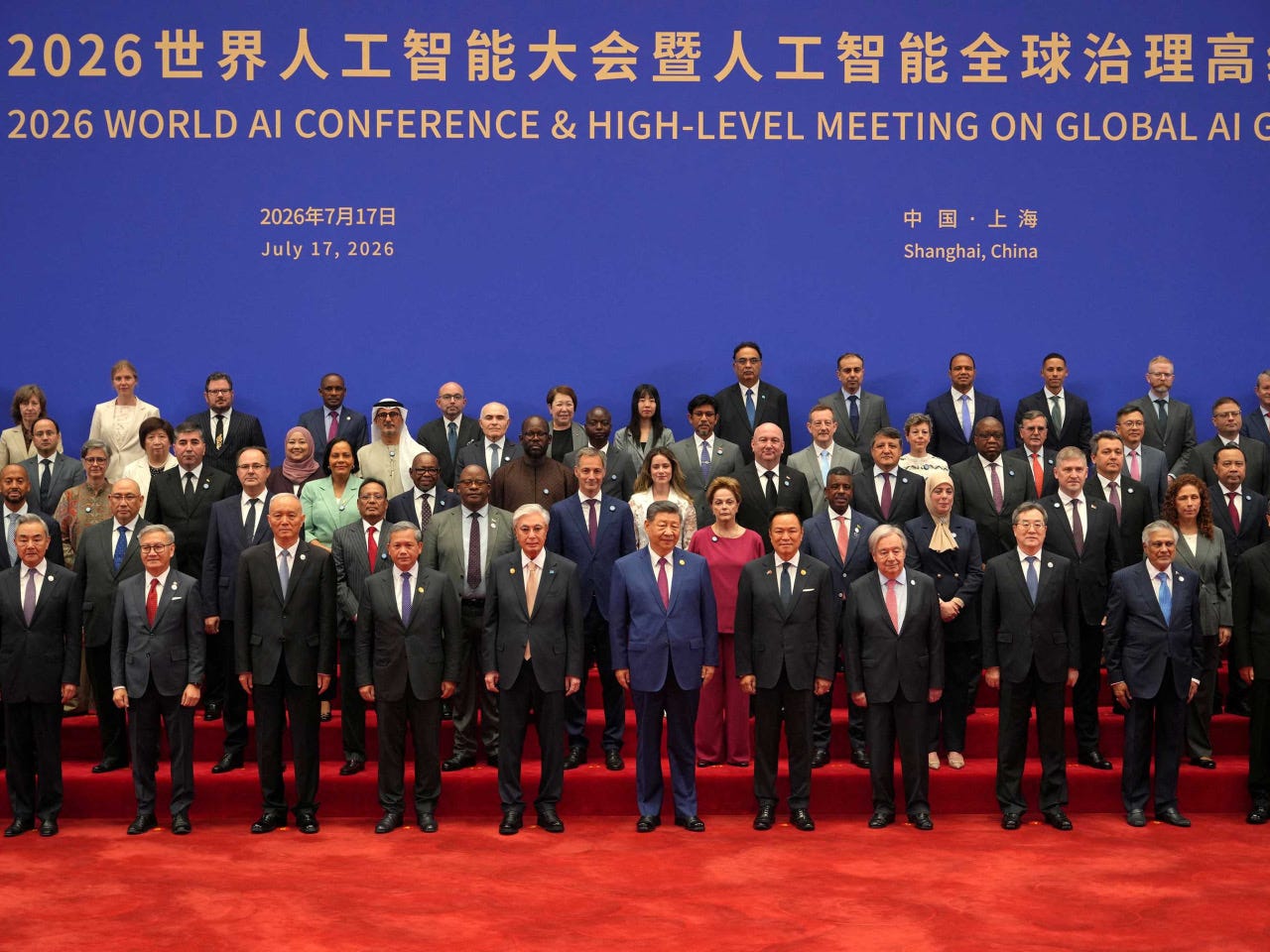
Seventy years ago, a group of young scholars first put forward the concept of artificial intelligence at the Dartmouth Conference in New Hampshire, the United States. Over the past seventy years, AI scientists and researchers around the world have kept exploring the unknown, moving forward through twists and turns, and making breakthroughs through perseverance. Seventy years later, as we face a new wave of vigorous AI development, it is of great significance that we are gathering here on the banks of the Huangpu River to discuss how to promote the development of global AI in a positive and beneficial direction for humanity. On behalf of the Chinese government and the Chinese people, I extend a warm welcome to all of you.
Looking back at history, the invention of the steam engine ushered in industrial civilization, the spread of electricity lit up modern society, and the birth of the Internet connected the entire world. Every technological revolution has profoundly reshaped the way human beings live and work, driving major leaps in economic and social development.
At present, changes unseen in a century are accelerating across the world, while a new round of technological revolution and industrial transformation is making faster breakthroughs. Global innovation in AI technology has entered an unprecedentedly active period. Intelligent technologies featuring ubiquitous connectivity, human-machine collaboration, cross-sector integration, and co-creation and sharing are releasing enormous energy in combination. They contain tremendous opportunities, but they also present governance challenges. Humanity has no choice but to confront the questions of our time directly: when machines begin to think, how should humans coexist with them? When algorithms take part in decision-making, how can security be ensured? When technology challenges ethics, how can governance keep pace? When gaps continue to widen, how can inclusiveness be achieved? These are questions the international community must think deeply about and answer together.
China believes that all countries should uphold a people-centered philosophy and the principle of developing AI for good, so that artificial intelligence can become an important source of momentum for shared prosperity and common security, and work together to build a just and reasonable global AI governance system. In this regard, I would like to offer four proposals.
First, uphold openness and win-win cooperation to drive innovation and development. Artificial intelligence is a new engine of global economic growth and an accelerator for the transformation of old and new growth drivers. It is moving from the "digital world" into the "physical world." We must seize this rare historic opportunity, encourage open source, openness, cooperation, and sharing, and comprehensively promote AI technological innovation, industrial development, and scenario-based applications. We should advance in coordination the upgrading of traditional industries, the growth of emerging industries, and forward-looking planning for future industries, so that AI can empower all sectors of the economy and society.
Second, strengthen risk awareness to ensure safety and controllability. Artificial intelligence should become a trustworthy tool for humanity. We must attach great importance to the various endogenous and derivative risks brought about by AI, and work to build systems of laws and regulations, technical monitoring, risk early warning, and emergency response. We must reinforce the safety baseline, prevent misuse and abuse, and ensure that artificial intelligence always remains under human control. At the same time, we should jointly oppose the practice of overstretching the concept of national security in the field of AI or placing one country's own security above the security of others.
Third, encourage inclusiveness and mutual learning among civilizations. The development and application of artificial intelligence should not erode or undermine the diversity of world civilizations or the unique cultures of individual countries. We should shape the values of artificial intelligence with the common values of all humanity, make good use of AI technologies to enhance understanding and inclusiveness among different civilizations, promote exchanges and mutual learning among them, and carefully cultivate a flourishing garden of civilizations in which each beauty is appreciated in itself and all beauties are shared together.
Fourth, advocate solidarity and cooperation to improve global governance. Artificial intelligence is the shared crystallization of human wisdom and a valuable asset for all humanity. We should practice true multilateralism, give full play to the important role of the United Nations, strengthen coordination on AI development strategies, governance rules, and technical standards, and form a global governance framework with broad consensus as soon as possible, so that this cutting-edge technology may better benefit human society. We should also carry out extensive international cooperation, help countries of the Global South strengthen capacity building, bridge the digital and intelligence divide, promote sustainable development, and avoid creating new historical injustices in the field of AI.
Ladies and gentlemen, friends,
This year marks the opening year of China's 15th Five-Year Plan period. The 15th Five-Year Plan lays out a blueprint for China's economic and social development over the next five years, and it also provides a list of opportunities for the international community. In recent years, China has actively embraced AI development, adhered to a combination of an efficient market and a well-functioning government, strengthened AI technological innovation, actively advanced the "AI+" initiative, and cultivated a healthy ecosystem in which all kinds of entities coexist and thrive together. The scale of the core industries of the intelligent economy has already exceeded 1 trillion yuan. Various intelligent terminals have entered ordinary households and tangibly improved people's lives. "Intelligent manufacturing in China" has become another striking hallmark of Chinese modernization.
At the same time, China has consistently adhered to the principle of giving equal weight to development and security. It has grasped the trends and laws of AI development, continuously improved related laws and regulations, policy systems, application norms, and ethical guidelines, and ensured that AI is safe, reliable, and controllable, so that this fine steed of artificial intelligence can run both fast and steadily.
As a responsible major country, China has always been committed to providing international public goods in the field of artificial intelligence. Since I proposed the Global AI Governance Initiative, China has successively promoted the adoption by consensus at the UN General Assembly of a resolution on international cooperation in AI capacity building, issued the AI Capacity-Building for All Plan and the "AI+" International Cooperation Initiative, and proposed the establishment of a World AI Cooperation Organization, continuously contributing Chinese solutions.
As the Chinese often say, a single string cannot make music, and a lone tree does not make a forest. The development of artificial intelligence should not be a solo performance by any one country, but a symphony of global cooperation. Through the joint efforts of all parties, the World AI Cooperation Organization has come into being in Shanghai, turning an idea from one year ago into a concrete achievement. This is a major measure by China in response to the calls of the Global South and in working with the international community to actively advance AI development and governance. It will become an important milestone in the history of AI development.
To further support global AI development and advance global AI capacity building, I announce that over the next five years, China will provide 5,000 training places in AI-focused programs for developing countries; establish international cooperation centers for AI applications with ASEAN, the League of Arab States, the African Union, the Community of Latin American and Caribbean States, the Shanghai Cooperation Organization, and BRICS countries; and promote the implementation of the "Mazu" intelligent meteorological early-warning solution in 30 countries, helping safeguard the lights of countless homes and protect peace and stability across the seas.
Ladies and gentlemen, friends,
As an old Chinese saying goes, "The wise adapt to changing times, and the knowledgeable respond according to circumstances." The faster AI technology develops, the more firmly we must keep it anchored to the right direction—toward the good and for the benefit of humanity; the more precisely we must calibrate the scope of regulation and governance; and the more promptly we must improve measures to prevent loss of control. We must always guide AI development with human wisdom and international consensus, so that it may truly become a powerful force for good that enhances the well-being of all humanity and advances human civilization.
China is willing, with a more open posture, more practical actions, and a longer-term vision, to work with all parties to grasp and respond to the opportunities and challenges brought by AI development, and join hands in creating an even better future for human society.
Thank you all!