

On November 5, China’s Ministry of Commerce announced that it would continue imposing anti-dumping duties on imports of n-propanol originating from the United States for another five years, effective the following day.
MOFCOM Announcement No. 54 of 2026: Final Determination of the Expiry Review of Anti-Dumping Measures Applicable to Imports of N-Propanol Originating in the United States
Issuing Department: Trade Remedy and Investigation Bureau
Announcement No.: Ministry of Commerce Announcement No. 54 of 2026
Date of Issuance: November 5, 2026
On November 17, 2020, the Ministry of Commerce (MOFCOM) issued Announcement No. 46 of 2020, deciding to impose anti-dumping duties ranging from 254.4% to 267.4% on imports of n-propanol originating in the United States for a period of five years, effective November 18, 2020.
On November 17, 2025, in response to an application submitted by China’s domestic n-propanol industry, MOFCOM issued Announcement No. 74 of 2025, initiating an expiry review investigation of the anti-dumping measures applicable to imports of n-propanol originating in the United States, effective November 18, 2025.
MOFCOM investigated the likelihood of the continuation or recurrence of dumping of n-propanol originating in the United States, as well as the likelihood of the continuation or recurrence of injury to China’s domestic n-propanol industry, should the existing anti-dumping measures be terminated. Pursuant to Article 48 of the Regulations of the People’s Republic of China on Anti-Dumping (hereinafter referred to as the “Anti-Dumping Regulations”), MOFCOM made its final review determination (see Annex).
The relevant matters are hereby announced as follows:
I. Review Determination
MOFCOM has determined that, if the existing anti-dumping measures are terminated, dumping of n-propanol originating in the United States into China is likely to continue or recur, and injury to China’s domestic n-propanol industry is also likely to continue or recur.
II. Anti-Dumping Measures
Pursuant to Article 50 of the Anti-Dumping Regulations, MOFCOM, based on the findings of its investigation, recommended to the Customs Tariff Commission of the State Council that the existing anti-dumping measures be maintained.
In accordance with MOFCOM’s recommendation, the Customs Tariff Commission of the State Council has decided to continue imposing anti-dumping duties on imports of n-propanol originating in the United States for a further period of five years, effective November 6, 2026.
The scope of products subject to the anti-dumping duties remains unchanged from that specified in MOFCOM Announcement No. 46 of 2020. Details are as follows:
Product under investigation: N-Propanol
Alternative names: 1-Propanol, Propanol
English names: n-Propanol, n-Propylalcohol, 1-Propanol, 1-Propylalcohol, Propan-1-ol, Ethylcarbinol, or 1-Hydroxypropane, abbreviated as NPA.
Molecular formula: C₃H₈O
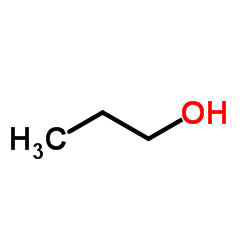
Chemical structural formula:
Physical and chemical properties: A colourless liquid with an alcohol-like odour; molecular weight: 60.10; melting point: −127°C; boiling point: 96.5–98°C; relative density: 0.803–0.805 (at 20°C); flash point: 23°C. It is soluble in water and common organic solvents, including alcohols, ketones, aldehydes, ethers, glycols, and aromatic and aliphatic hydrocarbons.
Main applications:
N-Propanol is widely used, either directly or after esterification into n-propyl acetate, in the production of food packaging and as a solvent in printing inks used for food packaging. N-Propyl acetate is also an important component of electrolytes used in lithium batteries for new energy vehicles.
As a pharmaceutical precursor, n-propanol is extensively used in the production of erythromycin and is an indispensable raw material for macrolide antibiotics. It also serves as a starting material for pharmaceutical products such as prosultiamine and probenecid.
As a chemical intermediate, n-propanol is used in the synthesis of glycol ethers, n-propylamine, n-propyl esters, bromopropane, and other chemicals.
As an effective solvent, n-propanol is widely used in coatings, paints, adhesives, cosmetics, plastics, and disinfectants.
N-Propanol is also an important raw material in numerous other applications, including food additives, feed additives, synthetic fragrances, cleaning agents, plasticisers, lubricants, degreasing solutions, adhesives, preservatives, and brake fluids.
Tariff classification: The product falls under tariff code 29051210 of the Import and Export Tariff Schedule of the People’s Republic of China.
The anti-dumping duty rates remain unchanged from those stipulated in MOFCOM Announcement No. 46 of 2020.
The applicable anti-dumping duty rates for US companies are as follows:
CompanyAnti-Dumping Duty Rate1. The Dow Chemical Company254.4%2. OQ Chemicals Corporation267.4%3. All other US companies267.4%
III. Method of Collecting Anti-Dumping Duties
From November 6, 2026, importers of n-propanol originating in the United States shall pay the applicable anti-dumping duties to the Customs authorities of the People’s Republic of China.
Anti-dumping duties shall be levied on an ad valorem basis, calculated using the customs value of the imported goods as determined by Customs.
The calculation formula is as follows:
Anti-dumping duty payable = Customs value of the imported goods as determined by Customs × Applicable anti-dumping duty rate
Import-stage value-added tax (VAT) shall be calculated on an ad valorem basis, using the customs value of the imported goods as determined by Customs, plus the applicable customs duties and anti-dumping duties, as the taxable base.
IV. Administrative Reconsideration and Administrative Litigation
Pursuant to Article 53 of the Anti-Dumping Regulations, any party dissatisfied with the determination of this review may apply for administrative reconsideration in accordance with the law or initiate legal proceedings before a People’s Court.
V. Effective Date
This Announcement shall take effect on November 6, 2026.
Annex: Final Determination of the Expiry Review of Anti-Dumping Measures Applicable to Imports of N-Propanol Originating in the United States
Ministry of Commerce of the People’s Republic of China
November 5, 2026
The duty rate remains 254.4% for Dow Chemical and 267.4% for OQ Chemicals and other US companies. This is an extension of a trade remedy measure first introduced in 2020, with no changes to either the duty rates or the scope of covered products. Its immediate effect is to maintain a substantial cost barrier for US n-propanol entering the Chinese market.
N-propanol may not be a familiar name, but it is closely connected to the production of everyday consumer goods. As an industrial solvent and chemical feedstock, it is widely used in packaging and printing inks, coatings, adhesives, pharmaceuticals, and other chemical products. N-propanol can also be processed into n-propyl acetate, which is used in packaging materials and other applications. Its use in lithium batteries for new energy vehicles, as mentioned in the announcement, is also primarily through this derivative. The measure therefore concerns an upstream raw material market that supplies multiple industries, including packaging, pharmaceuticals, and specialty chemicals.
Why was the decision announced now? The most immediate reason is that the previously initiated review was approaching its statutory deadline. In September 2025, Luxi Chemical and Nanjing Nuoao submitted an application on behalf of the domestic industry seeking an extension of the measures. The Ministry of Commerce subsequently launched the review on November 18, 2025, specifying that the investigation should be completed by November 18, 2026. The November 5 determination is therefore consistent with the established timetable.
However, the fact that this was an expiry review does not mean the outcome was merely a routine extension. The Ministry of Commerce had to determine whether dumping of US n-propanol, and the resulting injury to Chinese producers, would be likely to continue or recur if the existing measures were removed. Its final determination was affirmative. For domestic manufacturers, the underlying question was whether, after several years of capacity expansion and market development, they had become sufficiently competitive to withstand the pressure that might follow the removal of the duties.
Publicly available application materials provide some context for the concerns expressed by Chinese producers. According to the figures presented in the 2025 expiry review application published by the Ministry of Commerce, US n-propanol’s share of the Chinese market declined from 27.97% in 2018 to 8.39% in 2024, before recovering to 12.87% in the first half of 2025. During that six-month period, import volumes from the United States increased by 84.22% year on year, significantly outpacing the 21.37% growth in Chinese demand.
A rebound in imports does not, by itself, establish dumping. It does, however, help explain why domestic producers actively sought to maintain the duties. Even with the existing high tariff rates, US suppliers were expanding their sales to China, raising concerns that removing the duties could intensify competitive pressure. It is important to note that these figures come from an application submitted by domestic producers, rather than real-time market statistics for 2026. In the first half of 2025, the United States accounted for 78.65% of China’s total n-propanol imports, but only 12.87% of overall Chinese demand.
The US businesses most directly affected are the American manufacturing operations of Dow Chemical and OQ Chemicals. OQ Group resumed using the Oxea name in 2025, although the Chinese announcement continues to refer to OQ Chemicals Corporation. In a separate Announcement No. 55 issued on the same day, the Ministry of Commerce also extended countervailing duties on US n-propanol for another five years, with rates of 37.7% for Dow and 34.2% for OQ.
Adding the two trade remedy duty rates together produces combined nominal rates of 292.1% and 301.6%, respectively, excluding ordinary customs duties and import VAT. Such substantial duties continue to constrain the competitiveness of US suppliers in the Chinese market. However, the measures apply specifically to US-origin n-propanol, rather than to these companies’ entire product portfolios or global operations.
Among Chinese companies, the most direct beneficiaries are Luxi Chemical and Nanjing Nuoao, a subsidiary of Sanwei Chemical. Both companies were applicants in the review, and the continuation of the measures helps protect their existing businesses while reducing policy uncertainty surrounding future investment. Other domestic producers of similar products, including Ningbo Juhua, a subsidiary of Juhua Group, and Nanjing Rongxin, may also benefit from the continued protection. For these companies, the principal value of the extension lies in reducing the risk of downward pricing pressure and market share losses that could otherwise arise if the duties were removed.
Because the existing duty rates remained in force throughout the review, the announcement will not cause a sudden overnight increase in the tax burden on US products. Nor will it automatically generate new orders or additional profits for Chinese manufacturers. For downstream industries such as packaging, printing inks, and pharmaceuticals, preserving domestic supply capacity offers long-term benefits. At the same time, continued restrictions on access to lower-priced imported raw materials may entail higher procurement costs.
Over the next five years, the measures will continue to provide domestic producers with a buffer against import competition.